Shortly before the United States and Israel moved to strike Iran, American intelligence officials believed they had identified the most consequential target of all: Ayatollah Ali Khamenei.
For months, the C.I.A. had been quietly tracking Iran’s supreme leader — mapping his movements, analyzing his security patterns and building what officials described to the New York Times as increasingly “high-fidelity” intelligence on his whereabouts. The surveillance effort intensified after last year’s 12-day war, when U.S. analysts gleaned new insight into how Khamenei and senior commanders communicated and relocated under pressure.
Then came a breakthrough.
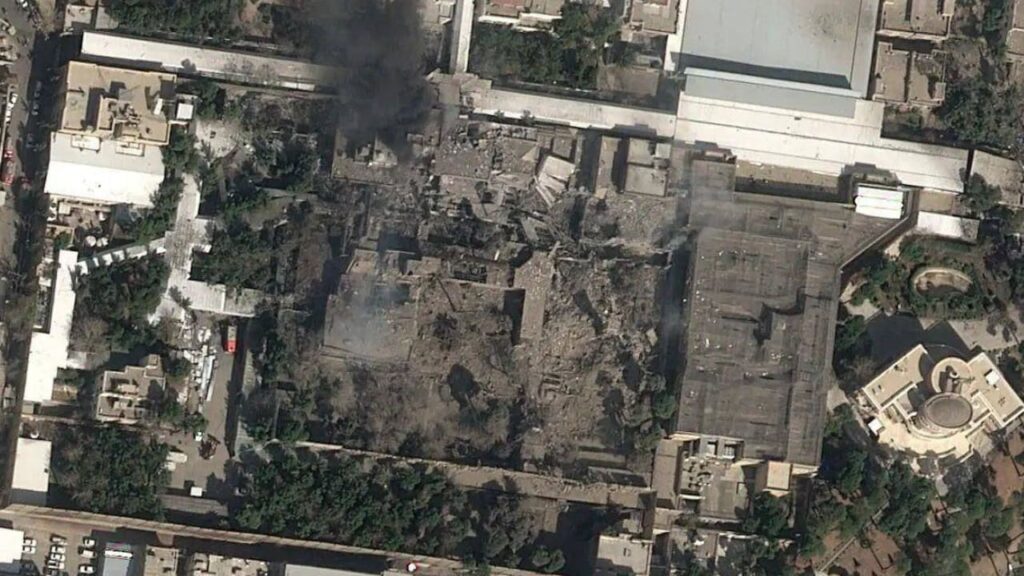
According to people familiar with the operation, U.S. intelligence learned that a gathering of Iran’s most senior political and military officials was scheduled for Saturday morning at a leadership compound in the heart of Tehran — a complex housing the offices of the presidency, the supreme leader and Iran’s National Security Council. Most critically, analysts determined that Khamenei himself would attend.
The discovery reshaped the timetable.
Originally, U.S. and Israeli planners had envisioned launching strikes under cover of darkness. But once the intelligence confirmed the presence of Iran’s top leadership at a single location, the timing was adjusted to exploit what officials saw as a rare window of opportunity.
The objective was clear: decapitate Iran’s leadership at the outset of a widening conflict.
Shortly after 6 a.m. in Israel, fighter jets lifted off. The strike package was relatively small, officials said, but equipped with long-range, precision-guided munitions designed for a narrow and devastating mission.
Two hours and five minutes later — around 9:40 a.m. in Tehran — missiles slammed into the compound.
At the time of impact, senior national security officials were gathered in one building. Khamenei was in another nearby structure. Israeli officials later described the operation as having achieved “tactical surprise,” despite Iran’s public preparations for war and heightened security posture.
The White House and the CIA declined to comment on the details. But people briefed on the planning described an operation that reflected months of joint intelligence work and unusually close coordination between Washington and Jerusalem.
The CIA, according to those familiar with the matter, passed its intelligence directly to Israel, which had been preparing a targeted strike against Iran’s senior leadership for months. The Americans provided what one person described as precise confirmation of Khamenei’s presence at the compound.
Officials briefed on the operation said the success of the strike was rooted in intelligence gains accumulated over the past year. During the earlier conflict, U.S. analysts studied how Khamenei moved under threat, how he relied on couriers and secure communications, and how the Islamic Revolutionary Guards Corps adjusted its protective protocols. Those insights allowed American and Israeli intelligence to better anticipate his behavior.
President Trump had publicly suggested months ago that the United States knew Khamenei’s location and could eliminate him if it chose. He wasn’t lying.
(YWN World Headquarters – NYC)
 Join the official YWN WhatsApp status