A U.S. submarine sank an Iranian warship in the Indian Ocean, as Washington and Israel intensified their bombardment Wednesday of Iran’s security forces and other symbols of power. As the war expanded yet again, Tehran vowed to completely destroy the Middle East’s military and economic infrastructure.
The tempo of the strikes on Iran was so intense that state television announced the mourning ceremony for Iranian Supreme Leader Ayatollah Ali Khamenei, who was killed in the conflict, would be postponed. Millions attended the funeral of his predecessor Ayatollah Ruhollah Khomeini in 1989.
In addition to striking Tehran on the fifth day of the conflict, Israel hit the Iranian-backed Hezbollah militant group in Lebanon, while Iran fired on Bahrain, Kuwait and Israel. As the conflict spiraled, Turkey said NATO defenses intercepted a ballistic missile launched from Iran before it entered Turkey’s airspace.
The war has killed more than 1,000 people in Iran and dozens in Lebanon, according to officials in those countries. It has disrupted the supply of the world’s oil and gas, snarled international shipping, and stranded hundreds of thousands of travelers in the Middle East.
Both sides are unrelenting in their attacks
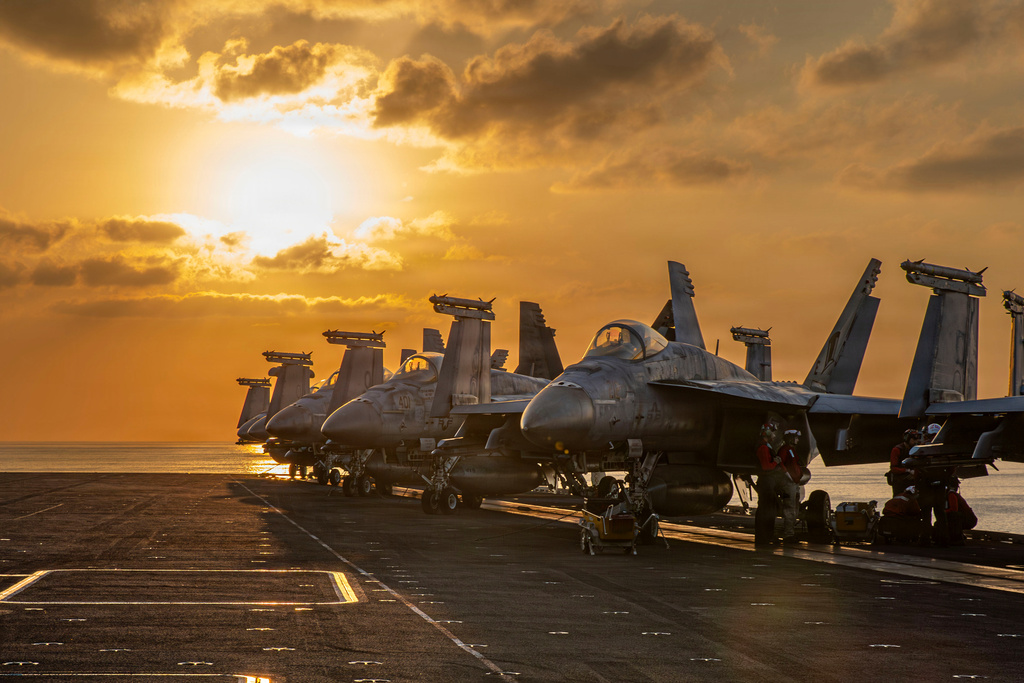
Defense Secretary Pete Hegseth said a torpedo from a U.S. submarine sank an Iranian warship in the Indian Ocean Tuesday night, saying the strike was the first such attack on an enemy since World War II.
Sri Lankan authorities said 32 people were rescued from the ship, which sank of their country’s coast. They said others died, without giving a number.
Israel said it hit buildings associated with Iran’s Basij, the all-volunteer force of the paramilitary Revolutionary Guard that conducted a bloody crackdown on protesters in January that killed thousands and saw tens of thousands detained in the country.
The Israeli military also said it hit buildings associated with Iran’s internal security command, which also has suppressed demonstrations in the past. It also pounded towns near Beirut.
Israel and the U.S. have said they want to see the Iranian public overthrow the country’s theocracy, and strikes against counterprotest forces are likely part of that effort.
Iranian state television showed the ruins of buildings in the center of the capital of Tehran, with interviewees saying the attacks damaged their homes. Strikes have also been reported in the holy Shiite seminary city of Qom, targeting a building associated with a clerical panel set to pick Iran’s next supreme leader. Iranian media said it was empty at the time.
State TV has begun calling the conflict the “Ramadan war,” a reference to the holy Muslim fasting month currently taking place. But that term also suggested leaders are trying to prepare the public for a protracted conflict.
Adm. Brad Cooper, the top U.S. military commander in the Middle East, echoed that sentiment, saying: “We’ve just begun.”
Cooper said American forces have damaged Iran’s air defenses and taken out ballistic missiles, launchers and drones. Israeli military spokesman Brig. Gen. Effie Defrin said such damage has led to a decline in launches from Iran.
Still, explosions echoed in the skies over Jerusalem on Wednesday. Israel’s military said Iran launched missiles toward the country, and Hezbollah sent rockets.
Iran has also struck around the region, and air sirens sounded Wednesday across Bahrain, home to the U.S. Navy’s 5th Fleet.
At least 1,045 people have been killed in Iran, the country’s Foundation of Martyrs and Veterans Affairs said Wednesday. Eleven people in Israel have been killed. More than 50 people have been killed in Lebanon, according to the Health Ministry. Six U.S. troops have been killed.
Those in Tehran are unsure of what to do
A resident of Tehran, who runs a clothing shop, said he didn’t know how to protect himself from the bombing.
“It’s very difficult to decide what to do. If I leave the city, how am I supposed to earn money and survive?” said the man, who spoke on condition of anonymity for the fear of reprisals.
Energy supplies in the crosshairs
Iran’s paramilitary Revolutionary Guard issued its most-intense threat yet, saying the strikes against it would “cost of the complete destruction of the region’s military and economic infrastructure.”
A container ship was attacked Wednesday afternoon while passing through the Strait of Hormuz, the narrow mouth of the Persian Gulf through which about a fifth of the world’s oil is shipped. The ship was hit by an unknown projectile, the United Kingdom Maritime Trade Operations said.
With Iranian attacks traffic through the strait, oil prices soared. Global stock markets have been hammered over worries that the spike in oil prices may grind down the world economy and sap corporate profits.
(AP)
 Join the official YWN WhatsApp status