
Tehran has been deliberately targeting the radar systems that serve as the �eyes� of air defense networks across the Middle East, the Wall Street Journal and other US media outlets reported on Sunday.
Several of these critical systems have been hit in recent days, weakening the ability of the United States and its allies to track incoming missiles.
According to the report, Iranian attacks have damaged radar, communications, and air defense systems in Qatar, the United Arab Emirates, Jordan, Bahrain, Kuwait, and Saudi Arabia.
The report noted that most of the attacks were carried out using Iranian one-way attack drones, such as the Shahed models. These drones cost only a fraction of the sophisticated missiles that U.S. air defense systems are designed to intercept. In recent days, Iran has launched fewer of its ballistic missiles and relied more heavily on drones.
�Overall, our defenses are performing well,� said Ravi Chaudhary, a former U.S. Air Force assistant secretary responsible for installations. �However, it�s clear the Iranians have a fairly good understanding of the kinds of targets they want to continue hitting�including command-and-control systems and our ability to detect incoming missiles and drones.�
A spokesperson for U.S. Central Command (CENTCOM) said the military maintains �full combat readiness� despite the damage. U.S. officials also said Washington continues to reinforce its defenses in the region with additional equipment and interceptors. They added that Iranian offensive capabilities are being steadily degraded.
For example, Admiral Brad Cooper, commander of U.S. forces in the Middle East, said Thursday that ballistic missile attacks have dropped by 90% and drone attacks by 83% since the war began.
The United States and its regional allies rely on a network of air defense systems � including THAAD, Patriot, and others � to intercept missiles, drones, and rockets launched by Iran and its proxies. These systems depend heavily on radar networks to detect incoming threats, and those radars are both expensive and relatively scarce.
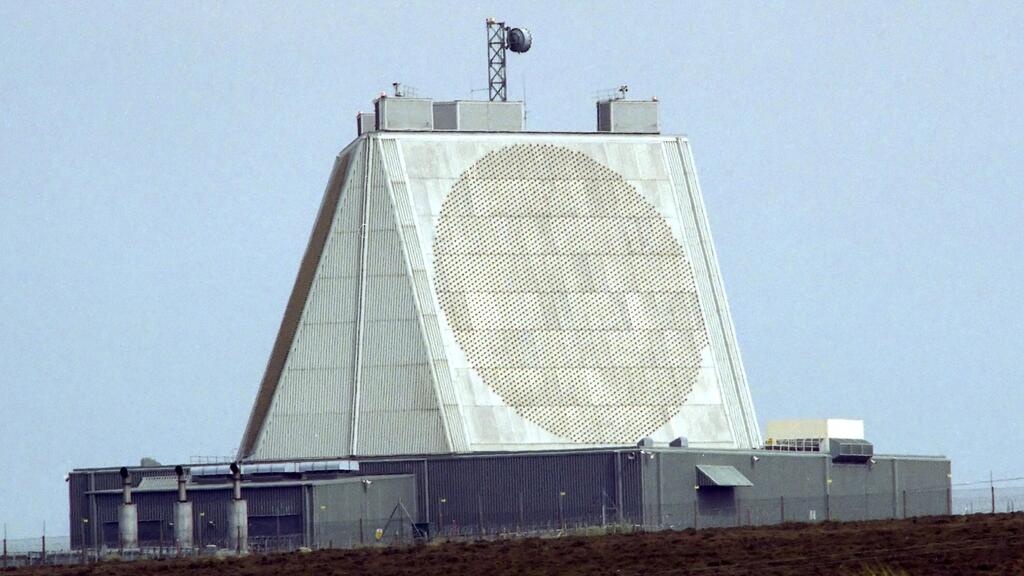
One of the most significant strikes reportedly hit an advanced early-warning radar system in Qatar, where the largest U.S. military base in the region is located. According to an American official and satellite imagery, the attack damaged an AN/FPS-132 radar system and impaired its operational capability.
The AN/FPS-132 is a wide-aperture radar designed to track multiple targets simultaneously. According to the International Institute for Strategic Studies (IISS), the United States operates five such fixed systems as part of its early warning network protecting North America from missile attacks. Each system can cost up to $1 billion.
�These are rare and strategically significant assets,� said Thomas Karako, director of the Missile Defense Project at the Center for Strategic and International Studies in Washington.
Satellite imagery from Planet Labs shows damage to the radar facility in Qatar, including destruction on the northeast side of the radar dome � facing Iran � as well as water runoff that likely resulted from firefighting efforts. Sam Lair of the James Martin Center for Nonproliferation Studies said the images illustrate �the vulnerability of even these advanced radar systems.�
Iran also struck a TPY-2 radar linked to a THAAD missile defense battery in Jordan, according to satellite images and a U.S. official. This radar is a critical component of the ground-based missile interception system that destroys ballistic missiles outside the atmosphere.
Satellite imagery also indicates damage to three radar facilities at the Arifjan base in Kuwait, as well as a strike on a satellite communications system at the U.S. Fifth Fleet headquarters in Bahrain. In Saudi Arabia, a March 1 satellite image shows smoke rising from a building at a radar site at Prince Sultan Air Base.
The United States has deployed key radar systems at strategic locations around the world to counter threats from Iran, North Korea, Russia, and other adversaries. The U.S. Navy also has several guided-missile destroyers in the region capable of intercepting ballistic missiles and other aerial threats.
These systems have played a central role in the current war with Iran. When Tehran launched a missile toward a Turkish base housing American nuclear weapons, a U.S. radar system in southeastern Turkey detected the threat and provided real-time warning to a U.S. warship in the eastern Mediterranean, which intercepted the missile.
The radar station in the town of K�recik was deployed more than a decade ago by the Obama administration to strengthen NATO defenses against Iranian missile threats.
The U.S. military currently operates only seven active THAAD batteries worldwide, including two permanently stationed in Guam and South Korea. Of the remaining five mobile batteries, two are deployed in the Middle East � in Israel and Jordan � to counter Iranian threats. An eighth battery was delivered to the United States last year but is still undergoing testing. Saudi Arabia and the United Arab Emirates have also purchased THAAD systems from the United States, some of which are reportedly already operational.
Most of the recent attacks have involved one-way explosive drones that detonate on impact. These drones fly low and relatively slowly, making them difficult to detect and intercept with traditional air defense systems.
They have played a central role in Iran�s retaliation campaign, striking oil facilities, military bases, and residential towers across the Gulf.
Iran is believed to have the capacity to produce thousands of drones, and has already exported some to Russia. Moscow has used Iranian drones � and similar models it produces domestically � in attacks on Ukraine, while also sharing intelligence with Iran that could help identify military targets.
�The problem of large-scale combined air attacks is already here,� Karako said. �We have to deal with all types of aerial threats � not just ballistic missiles. You have to protect the defenses themselves.�
(YWN Israel Desk�Jerusalem)
 Join the official YWN WhatsApp status




2 Responses
Give Ukraine full list of Russian critical infrastructure with coordinated, so we can make this even! Russia is feeding Iranians the list of targets!
or buy some of ukraine�s killer drones, which they have developed specifically to defend against this threat.