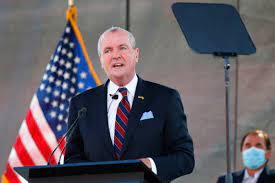
New Jersey Democratic Gov. Phil Murphy on Tuesday proposed a $48.9 billion budget that boosts K-12 funding by $650 million, makes a full public pension payment for the second straight year, redistributes nearly a $1 billion in property tax relief and raises overall spending by about 5% over last year’s plan.
Murphy unveiled the proposal during a speech in the Assembly chamber, the first time since 2020 and the COVID-19 outbreak.
New Jersey’s rosy finances stem from better than expected sales and income tax collections and from climbing economic output, with the state’s gross domestic product rate outpacing the nation’s and neighboring states, according to the state treasurer’s office and federal data.
Murphy, a former Goldman Sachs executive, has pitched himself to voters as the person to get the state’s financial house in order after two terms of Republican Chris Christie. Murphy’s prioritized making good on the state’s public pension payments, which for the second straight year would amount to a roughly $6.9 billion payment. He’s also nearly all the way to fully funding K-12 education according to the state formula that Christie did not abide by. His office estimates that fully funding could be achieved in two years.
He’s also grown the size of the state budget, which is up more than $14 billion from the plan enacted by Christie during his final year in office.
While the latest proposal hikes no new taxes, Murphy and the Democrat-led Legislature increased income taxes on people making over $1 million year as well as on businesses earlier in his first term.
Murphy promised no new taxes in his second term, which began in January. He’s also spotlighted affordability as a top issue — augmenting his longtime slogan about making New Jersey stronger and fairer to say he wants to make it “stronger, fairer, more affordable.”
Part of that, Murphy said, is tackling the state’s sky-high property taxes, which average about $9,300 a year.
He proposed overhauling a property tax rebate program to allow for homeowners making up to $250,000 to get a credit toward their property taxes of up to $700 in the fiscal year beginning July 1.
For the first time, he also wants to include renters. Those making up to $100,000 would get rebate checks — since they don’t pay property taxes directly — of up to $250.
Overall the governor’s proposal could benefit 1.8 million residents, up from the 470,000 who currently get the property tax assistance.
His budget also proposes a one-year fee waiver for marriage licenses and for renewals of certain health care licenses. Residents could get into state parks fee-free under his plan.
The budget sets aside some $9.92 billion for K-12 aid, up from $9.27 billion and about $2 billion more than where funding stood shortly before Murphy took over as governor.
The spending plan would keep New Jersey Transit fares flat, meaning no hike for a fifth straight year.
The state constitution requires a balanced budget to be enacted annually, with a deadline of June 30. Lawmakers will have a say over the next few months as they conduct hearings and decide what they’ll keep and what they’ll jettison from the governor’s proposal.
Republicans, who are in the minority, have already panned Murphy’s penchant for increased spending, calling for local government cuts as a way to reduce property taxes in response to his rebate program.
Despite those concerns, Murphy’s stewardship has appealed in part to one credit rating agency, with Moody’s boosting the state’s rating and citing “continuing trends of strong revenue and liquidity and its steps to more aggressively address liability burdens.”
Murphy’s proposal also calls for maintaining a $4.2 billion surplus and putting $1.3 billion into a fund for the current fiscal year to pay down debt.
(AP)
 Join the official YWN WhatsApp status