
The U.S. military said Wednesday it began transferring detainees from the Islamic State group who were held in northeastern Syria to Iraq to ensure they remain in secure facilities.
The move came after Syrian government forces took control of a sprawling camp housing thousands of IS detainees following the withdrawal of the U.S.-backed Syrian Democratic Forces as part of a ceasefire with the Kurdish fighters. The SDF still controls more than a dozen detention facilities with some 9,000 IS members.
U.S. Central Command said the transfer began on Wednesday and so far 150 IS members have been taken from Syria’s northeastern province of Hassakeh to “secure locations” in Iraq.
“Ultimately, up to 7,000 ISIS detainees could be transferred from Syria to Iraqi-controlled facilities,” the statement said, using a term to refer to the IS.
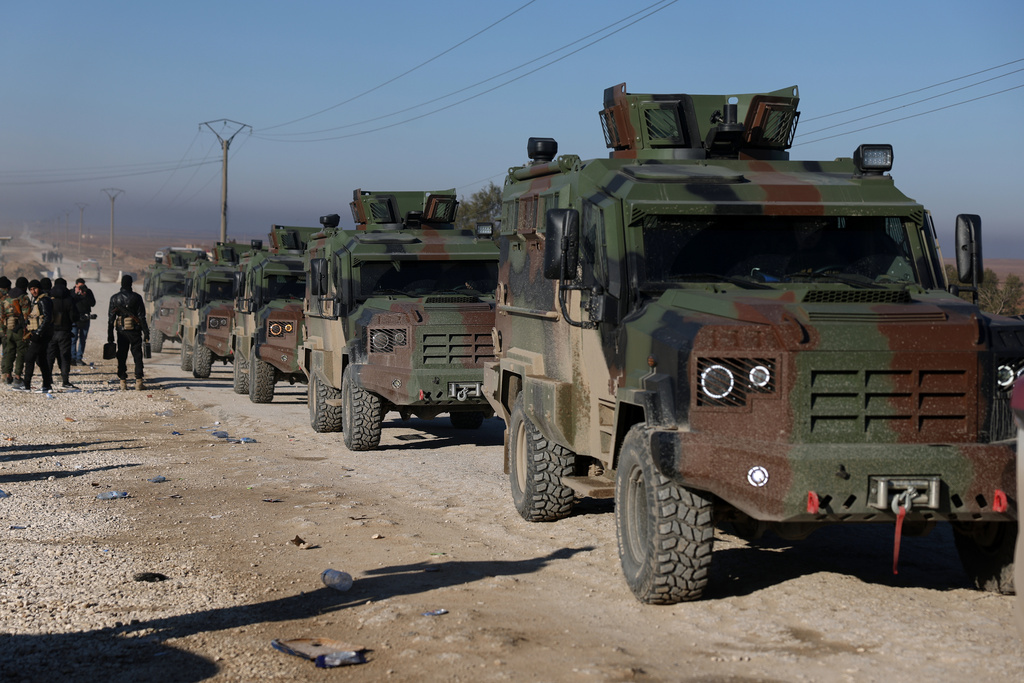
A convoy of armored vehicles with government forces moved into the al-Hol camp Wednesday following two weeks of clashes with the SDF, which appeared closer to merging into the Syrian military, in accordance with government demands.
At its peak in 2019, some 73,000 people were living at al-Hol camp. Their number has since declined with some countries repatriating their citizens.
The camp is still home to some 24,000, most of them women and children linked to the IS. They include about 14,500 Syrians and nearly 3,000 Iraqis. Some 6,500 others, many of them loyal IS supporters who came from around the world to join the extremist group, are separately held in a highly secured section of the camp.
There have been reports that some families fled during the chaos but there has been no official confirmation.
Families of IS militants plead to return home
An Associated Press journalist visited the camp Wednesday as scores of soldiers guarded the main entrance.
“Go inside and see the chaos that is happening. There are no clinics, no running water, no bread and no vegetables,” an Iraqi woman living in the camp said, after SDF fighters left the area. The woman, who spoke on condition of anonymity because of security concerns, called on the Iraqi government to repatriate her.
Another Iraqi woman, who also refused to give her full name out of fear of reprisal, told The Associated Press that her brother and uncle were held in jails in northeast Syria and called on authorities to release them so that she can all return home.
The Syrian government and the SDF announced a new four-day truce on late Tuesday, after a previous ceasefire broke down.
Northeast Syria was relatively calm on Wednesday. A drone attack killed seven soldiers and wounded 20 while they were inspecting a weapons depot abandoned by SDF fighters in the northeastern town of Yaaroubiyeh, the Defense Ministry said, blaming the Kurdish forces. The SDF in a statement denied it, saying the blast was triggered by soldiers moving the ammunition.
Kurdish fighters still in control of prisons with IS detainees
The SDF and the government traded blame over the escape Monday of IS members from a prison in the northeastern town of Shaddadeh. Many of the detainees were recaptured by government troops who took control of the jail, state media reported.
Under a deal announced Sunday, government forces were to take over the control of the prisons but the transfer did not go smoothly.
The largest detention facility, Gweiran Prison, now called Panorama, has held about 4,500 IS-linked detainees and still was in the SDF hands.
Defense Ministry spokesman Brig. Gen. Hassan Abdul-Ghani said in televised comments Tuesday night that the government “was and still is in direct confrontation” with the IS. He added that authorities are ready to take over prisons with IS members.
The IS was defeated in Iraq in 2017, and in Syria two years later, but the group’s sleeper cells still carry out deadly attacks in both countries. The SDF played a major role in defeating the IS.
Tom Barrack, the U.S. envoy to Syria, said in a statement Tuesday that the SDF’s role as the primary anti-IS force “has largely expired, as Damascus is now both willing and positioned to take over security responsibilities.”
He added that the “recent developments show the U.S. actively facilitating this transition, rather than prolonging a separate SDF role.”
(AP)
 Join the official YWN WhatsApp status


