
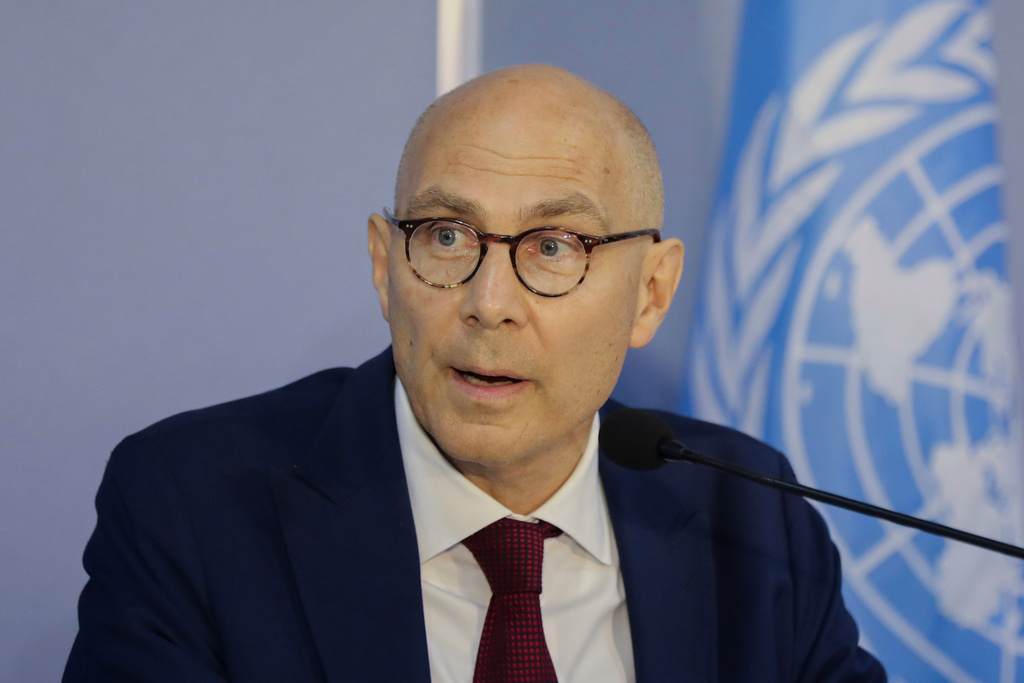
The U.N. human rights chief said Thursday that his office is in “survival mode” as he presented an appeal for $400 million to meet its estimated needs this year, after funding cuts last year hurt its work in 17 countries including Colombia, Myanmar and Chad.
Volker T�rk laid out his office’s needs after the United States and some other traditional top donors in the West cut back their outlays for humanitarian aid and many U.N.-related organizations in 2025, warning of damage to its monitoring of rights worldwide.
“These cuts and reductions untie perpetrators’ hands everywhere, leaving them to do whatever they please,” he told diplomats at his office’s headquarters overlooking Lake Geneva. “With crises mounting, we cannot afford a human rights system in crisis.”
“I am thankful to our 113 funding partners — including governments, private, and multilateral donors — for their vital contributions,” T�rk said. “But we are currently in survival mode, delivering under strain.”
His office receives money through the regular U.N. budget, but traditionally gets most of its funding through voluntary contributions from member countries. It is seeking $400 million in voluntary funding this year.
Last year, the Office of the High Commissioner for Human Rights had initially appealed for $500 million in voluntary contributions, but received nearly $258 million. It received $191 million through the regular budget, some $55 million less than initially approved.
The United States, under the Trump administration, halted its contributions in 2025; A year earlier, the U.S. under the Biden administration was the top single donor of voluntary contributions, with $36 million.
A U.N. rights office tally also showed France, for example, did not provide any voluntary funding last year, after contributing more than $5 million in 2024. Britain also lowered its outlay last year. Donors like Sweden, Germany and the European Union raised their contributions from 2024, however.
Citing the impact, T�rk said his office last year undertook fewer than half the monitoring missions it did in 2024; pared down its “engagement” in the peace process in Colombia, where three of its eight country offices are closed; faced cuts of 60% to its Myanmar program; and reduced its advocacy and assistance for nearly 600 detainees in Chad.
“At a time of escalating gender backlash, our work to prevent gender-based violence and protect the rights of LGBTIQ+ people has suffered cuts of up to 75%,” he added.
The rights chief trumpeted his office’s work in places like Ukraine, where its monitoring mission has kept tabs on civilian casualties since 2014; in Palestinian areas, where it has trained over 320 staffers to identify people in need; and in Colombia, where it worked with the Defense Ministry to establish codes of conduct and training.
(AP)
 Join the official YWN WhatsApp status



One Response
Hey T�rk, when you finally go out of business, don’t forget to close the door behind you, on your way out..