
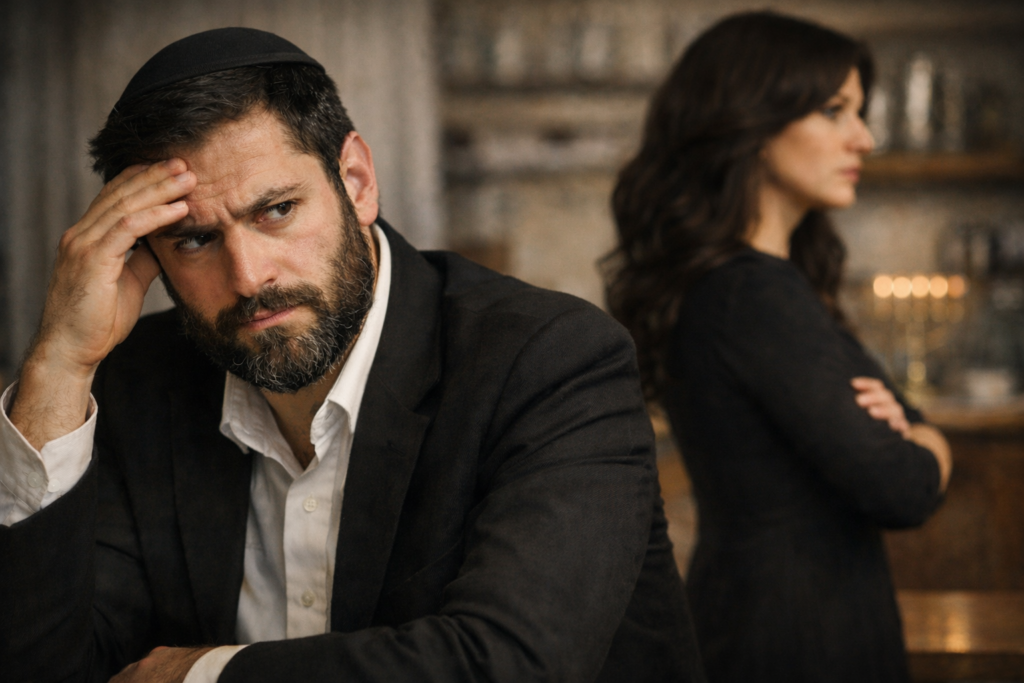
Have you ever noticed how, when you are really upset, people suddenly become simple?
Someone who is normally a whole, complicated human being with history, stress, and good intentions turns into one thing, selfish, toxic, the problem. A situation that used to feel layered suddenly feels obvious, and somehow everyone else is wrong. That is not clarity. That is your nervous system hitting the panic button.
When we are triggered, when the body reads threat and shifts into fight or flight, the brain starts conserving energy. Nuance is expensive. Complexity is slow. Survival mode wants quick conclusions. Black and white. Safe or dangerous. Our perspective narrows.
We stop seeing the whole person. We see a slice, usually their worst slice. A version of them that fits neatly into a threat story. The more activated we are, the more convinced we feel. It feels like insight, like we finally see who they really are. But certainty is not the same as accuracy.
One of the clearest signs that we are triggered is when someone loses their humanity in our mind. There is no room for contradiction. No “and.” No curiosity. Just a flat story about who they are. That is not wisdom. That is tunnel vision.
The important reframe is this. When people start looking one dimensional, it is not a signal to act. It is a signal to pause. Not to confront, not to decide. Not to send the text you are drafting in your head. It is a cue to regulate.
Perspective does not come from thinking harder. It comes from calming the body. When the nervous system settles, the lens widens on its own. You can hold more than one truth again. You remember that people are messy, stressed, and inconsistent, including you.
This shows up everywhere, but it is especially clear in parenting and marriage.
In parenting, tunnel vision sounds like this. My child is manipulative. They are doing this on purpose. They do not care how this affects me. When we are tired, embarrassed, or feeling out of control, our nervous system reads our child’s behavior as a threat. Not a physical threat, but a threat to our competence, our authority, or the hope that we are getting this right. In that moment, the child stops being a developing human with an immature nervous system and becomes the problem.
That is the moment to pause. Not because the behavior is fine, and not because boundaries do not matter, but because correction delivered from fight or flight rarely teaches what we think it does. It comes out sharper than intended, disconnected, or driven by the need to regain control.
When we regulate first, we can still hold limits. We just do it instead of reactivity. The question shifts from “How do I shut this down?” to “What is actually going on here?” That small shift can change the entire interaction.
In marriage, tunnel vision turns into character judgments. They are selfish. They never listen. This is just who they are. When we are activated with a partner, years of shared history collapse into one painful moment. Effort disappears. Context disappears. The person we chose becomes a cut out version of their worst behavior. This is where one often gets stuck.
Once someone becomes one dimensional in your mind, curiosity shuts down. Repair feels pointless. The nervous system is no longer looking for connection. It is looking for protection. Stepping back is not avoidance. It is choosing not to have important conversations from a state that can only see threats.
When we regulate ourselves, memory and complexity return. You can say, “That really hurt me,” instead of, “This proves everything about you.” That difference is often the line between escalation and repair.
So the next time your mind locks in on how wrong, bad, or threatening someone feels, try a softer question. Am I seeing clearly, or am I seeing narrowly?
If it is narrow, the work is not to push forward. It is to slow down, ground yourself, and let your nervous system come back. Your humanity, and theirs, becomes visible again once the threat response quiets. That is a much better place to move from.
Chayi Hanfling is a licensed clinical social worker who is experienced and passionate in helping individuals, families, and couples. She specializes in couples counseling, EFT, women’s health, anxiety management, OCD, trauma, and other mental health challenges. She can be reached at https://chaicounseling.org or [email protected]
 Join the official YWN WhatsApp status





6 Responses
Sounds like your gaslighting yourself about the truth.
I get the point but you also have to be honest about the _reality_ of the situation. Once you deal with the situation as it _is_ the “narrow minded” thinking then can shift to see the whole person and all his good qualities.
Yes there are people who are manipulative and they show that sides of themsleves
Once someone shows that side of themsleves over and over again it’s only natural for a person to file that away and keep that in mind to protect themslevss. Once they change their behavior and act with decency then they can _earn_ a better outlook from others.
With kids today here is the answer.
Don�t be simple minded. Most of the kids off the derech is because their parents were nieve and simple minded. They had no idea who their kids friends were or their young kids internet connections to bad influence.
So here is the solution.
When your kid is 8 to 12 years old get them a tutor in whatever subjects they need. When a kid starts to fail in school they may start hanging out with other failures.
When your kid hits bar mitzvah through ages15 Thats when trouble starts.
You need a Mentor. It could be an 18 year old or older who is someone you would want your son to look up to.
It may be expenses. But remember costing a lot does not guarantee success. The mentor has to believe in your kid. Believe that he can become great. Have a friend talk to the mentor. If the mentor tells your friend this kid is hopeless �Drop this mentor. The mentor may not tell the parents the truth what he believes about your kid but he would spill the beans to a stranger like your friend. Results could take sometimes months. But keep after your kid. Dont listen to these therapists who tell you let your kid do what he wants. No no no. no goyisha music. No tattoos,no piercings. But once you got a good mentor than let the mentor handle your kid. You don�t say a word even if his hair is colored purple. A strangers advice to a kid is more listened to than a parent most of the time. Now here is a secret for those who can�t afford a mentor. Get someone who is a famous speaker or rabbi to get your kid interested. For example millions of kids follow ball players or movie stars. They don�t know these stars nor do the stars know them. But the kids will dress like the stars and act like the stars even though they never met them in person. Get videos or recordings like yy Jacobson or Eli Stefansky available to your kids. If they take an interest then introduce them to these rabbis and get them to take a picture together. Whatever you do daven daven daven but always keep your eyes open who their friends are. Be careful where you move. Bad kids ? nfluence the good kids. Another important point. How your son dresses. If he wears a big black hat then the bad kids will avoid him. They will think he is too Frum. Get him a nice expensive black hat. Of course white shirts. Get him thick tziztzis strings. You must inspire him how when mossiach comes there will be 700 goyim clamoring to just hold on to his tzizas. It�s in Zechariah 8:23. Wishing you all success. No matter how far your kid has strayed they can still become a Rosh yeshiva.
And also it would go against nature to try to find connection with a person that manipulates, acts cruelly, that’s not a stress response that’s called self protection.
This is brilliant
Good stuff. Thanks for the article.
This is True.
However, after you have been damaged repeatedly by people who do not take care of their own issues you become smarter, faster.
There are people in our communities – parents, teachers, coaches, Rabbonim, therapists, and baalei chesed and baalei tzedaka who are constantly hurting people and then blaming the victims.
They are bona-fide narcissists.
The chilul Hashem that they cause in private is devastating.
These oppressors remain publically calm, and condescending as they leave victims in their wake. They preach calm and Emuna while causing weak people to get sick. Emotionally and or physically.
And then they feed their ego off the damage that they caused. As if the resulting distress is proof that their victim was a less than equally deserving Jew, as proven by their current instablility.
If you damage people in private, Hashem knows.
If your behavior gives other people Traumatic Stress, their symptoms are not proof that they are undeserving.
If you know somebody experiencing extreme stress be supportive. Don’t respond to their need for validation with a misplaced lecture about lashon hora, forgiveness, or other sanctimonious sermons.