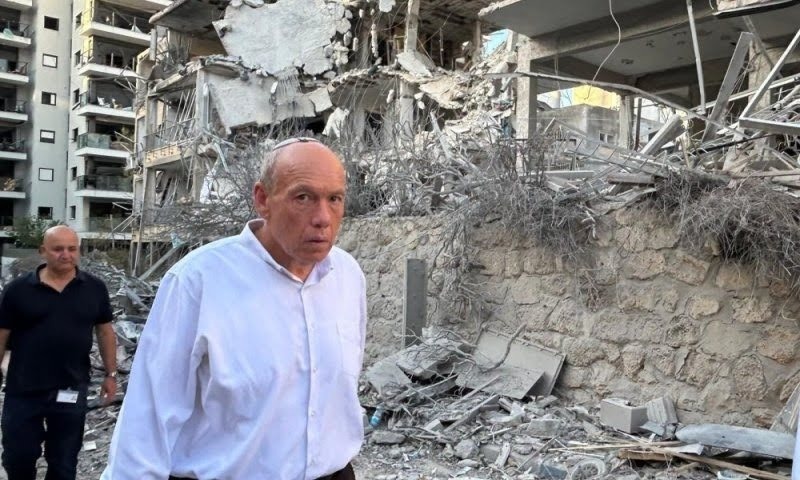
State Comptroller Matanyahu Englman’s report published on Tuesday exposed alarming government failures during emergencies, as evident in the war following the October 7 massacre.
Audits across dozens of local authorities and ministries revealed systemic breakdowns at every level. Critical systems–from health and security to education and mental health–failed to function properly and left citizens without proper support.
Public shelters
Nearly one-third of Israel’s population still lacks adequate protection from missile attacks. According to the report, as of early 2025, approximately 3.2 million people–33.6% of Israel’s residents–do not have access to standard protective shelters. This includes 42,575 residents living in high-risk areas, in communities 7 to 20 kilometers (4 to 12 miles) from the Gaza border. In addition, about 11.7% of public shelters across the country are deemed unfit for use.
Public shelters in Ashkelon, Givatayim, Holon, Gilboa, and elsewhere were found to be unusable. Inspectors found shelters that had been severely neglected–with no lighting, rusted doors, blocked escape routes, leaks, and other issues.
The report also criticized delays in a government program to help residents of Ashkelon build reinforced safe rooms. Although the cabinet approved the initiative in early 2022, the Housing Ministry did not publish procedures for accessing grants and loans until June 2023.
As a result, budgets totaling 106 million shekels for 2022 and 2023 went largely unused. Between July 2023 and September 2024, only one eligible applicant received assistance–a grant of 158,000 shekels–out of 50 million shekels allocated for that year.
“When the government, the Home Front Command, and local authorities fail to prepare in routine times, Israeli citizens pay the price when a crisis erupts,” Englman wrote.
Schools
The report also identified major shortcomings in adequate protection for Israeli schoolchildren. Education Ministry data show that as of March 2024, roughly 25% of students in 94% of Israeli schools–more than 466,000 children–studied in classrooms without standard protective spaces. At the time of the audit in August 2024, the ministry lacked shelter data for about 51% of kindergarten classrooms, and 46% of daycare centers had no standard protection during the 2023-24 school year.
Hospitals
The report devoted a major section to the protection of hospitals, warning that gaps pose a serious threat to the health system’s ability to function during prolonged conflict. Englman cited findings from inspections conducted shortly after the Oct. 7 attack, which revealed urgent shelter inadequacies, particularly in life-saving treatment areas.
Over half of hospital beds in high-risk areas near Israel’s borders lack adequate protection for critical facilities, including 67% of imaging machines, 48% of general inpatient beds, 25% of intensive care beds, 22% of operating rooms, 18% of dialysis stations, and 17% of neonatal cribs.
Nationwide, 71% of hospital beds remain unprotected, along with 56% of operating rooms. The most alarming gaps were found in major medical centers far from the border: 64% of ICU beds lack protection, roughly 56% of catheterization rooms are unprotected, and 69% of imaging machines are not protected.
Long-term care, psychiatric and rehabilitation hospitals were found to be especially vulnerable. In Israel’s south, fewer than one-third of beds are protected, and in the Tel Aviv area, only about 7% are.
Lack of accountability
The report concludes that no senior officials have been held personally accountable, and no significant corrective measures have been taken. Even issues repeatedly flagged in earlier reports were left unaddressed, with no systemic reforms implemented.
The Health Ministry estimates that closing shelter gaps in hospitals would cost approximately 4.8 billion shekels, but most long-term projects remain unfunded. Englman called for a national, multi-year plan coordinated with the Finance Ministry to prioritize and fund hospital protection.
In its written response, the Health Ministry said strengthening protection has long been a priority but acknowledged severe resource constraints. It added that since the war began, it has accelerated efforts, adding more than 3,600 protected hospital beds at a cost exceeding 670 million shekels, including during the recent war with Iran. Additional funding for hospital protection projects, including at Soroka Medical Center, is expected to be included in the 2026 state budget.
(YWN Israel Desk–Jerusalem)
 Join the official YWN WhatsApp status