
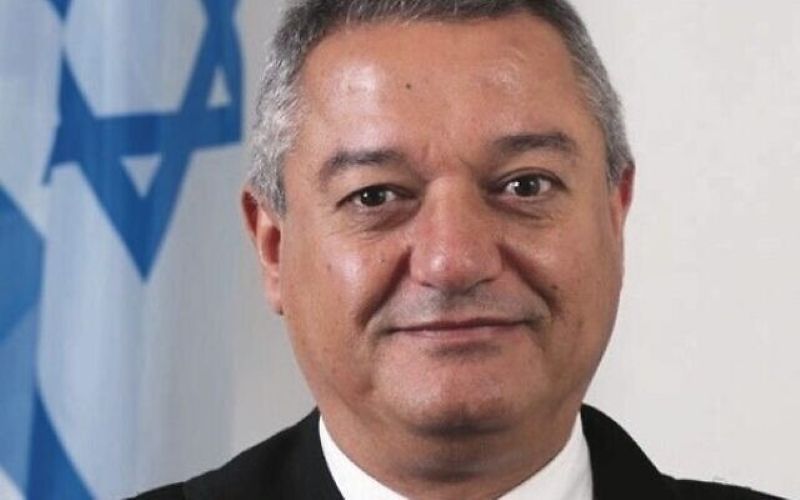
Several organizations have filed a complaint with the Ombudsman for Complaints Against Judges, Asher Kula, demanding an investigation into High Court Justice Khaled Kabub amid suspicions of a conflict of interest in his rulings.
The complaint follows a Channel 14 News expos? alleging that Kabub ruled in at least two cases in which one of the parties was represented by Attorney Mohamed Rahal, his former son-in-law, who is on his recusal list.
In their letter, the organizations stated that such a situation raises serious ethical concerns. “A judge must uphold not only justice itself but also the appearance of justice. When a judge presides over a case involving a relative (former or current) who appears on his recusal list, it gravely undermines this principle. This is not the first time questions have arisen about Justice Kabub’s conduct regarding conflicts of interest, which necessitates a thorough and detailed investigation by the ombudsman.”
This is not the first time that Kabub, an Israeli-Arab judge who became the Supreme Court’s first Muslim member in 2022, has been accused of ethical violations. Several complaints were previously issued against Kabub in 2024 for violating ethical conduct rules for judges, including meeting with Tel Aviv Mayor Ron Huldai and promoting his daughter’s law firm.
Apart from ethical violations, serious accusations of supporting terrorists and criminals have been made against Kabub, who is considered a liberal judge.
In 2023, Kabub’s decision to release an Arab-Israeli rapist from custody until the end of the proceedings due to the lack of “significant physical violence” during the act sparked outrage. Following the ruling, the Association of Rape Crisis Centers in Israel (ARCCI) filed a complaint against him.
In March 2024, Kabub’s remarks during a hearing on the detention of a terror suspect sparked calls for his impeachment by government ministers and coalition MKs.
During the hearing, Kabub questioned why the terrorist could not be placed under house arrest with electronic monitoring, noting that several of his co?suspects had been released as part of the November hostage?release deal with Hamas.
The case involved an East Jerusalem resident accused of participating in riots in Sur Baher in November 2022. According to the charges, he and three minors manufactured and threw pipe bombs at Jews.
At a Supreme Court hearing on the State Attorney’s request for a second extension of the terrorist’s detention, Kabub pressed the state’s representative on whether electronic?monitored house arrest could serve as an alternative to continued detention. He pointed out that three other suspects had already been released and suggested that similar leniency might be appropriate in this case.
When the state’s attorney responded that those individuals had been freed under the hostage?release agreement with Hamas, Kabub countered that the State Attorney’s Office had consented to their release, making it reasonable to ease conditions for the remaining suspect as well.
“You found it appropriate to release them. To release those individuals and then claim that this one is too dangerous even for electronic monitoring–there is a certain dissonance between these positions, and it pains me to write it… The state’s stance is rigid,” Kabub said.
In response, Communications Minister Shlomo Karhi slammed Kabub for bolstering Hamas’s negotiating tactics.
“Hamas murdered our sons and daughters and is trying to force us to release murderers in exchange for our hostages, and Justice Kabub is giving Hamas a tailwind,” Karhi said.
“The Judicial Selection Committee must convene to impeach Justice Kabub immediately,” he concluded. Other ministers expressed similar sentiments.
(YWN Israel Desk–Jerusalem)
 Join the official YWN WhatsApp status





2 Responses
But they won�t put Chareidim as Supreme Court judges. Yet they want Chareidim in the army. Glad I live in America.
Flatbush yid, name one Chareidi with the educational background required to be supreme court justice