
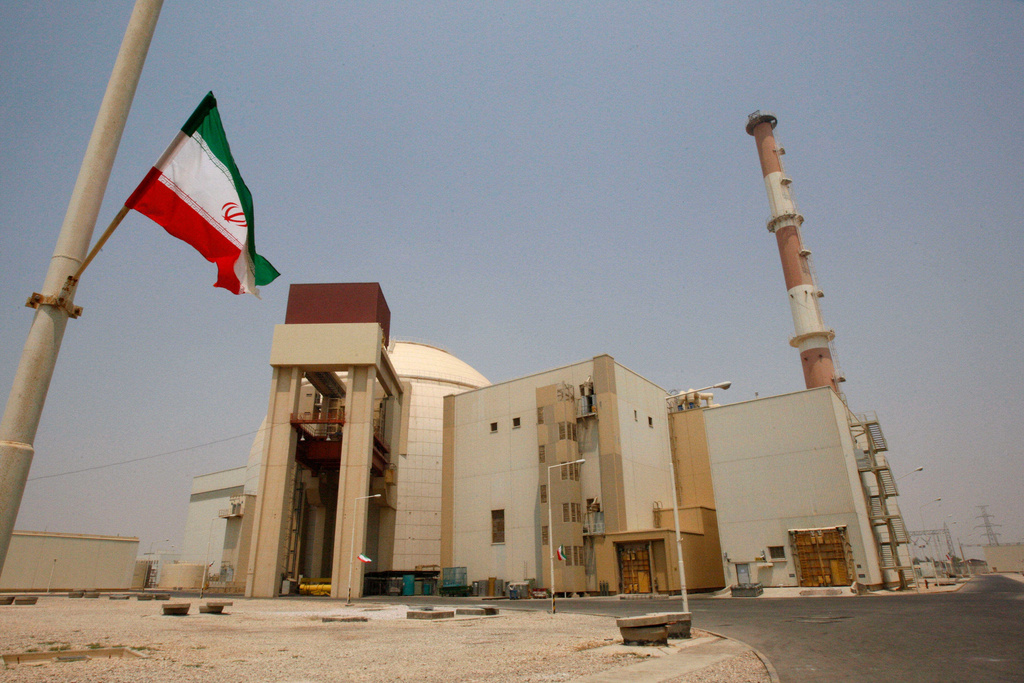
Iran could agree to dilute its stockpile of uranium enriched to 60 percent in exchange for the lifting of sanctions related to its nuclear program, according to comments made Monday by Mohammad Eslami, head of the Atomic Energy Organization of Iran.
Speaking to reporters, Eslami said Tehran is open to reducing its highly enriched uranium reserves if international restrictions are removed, according to Iran’s state-run media.
Eslami also confirmed that Iran has resumed communications with the International Atomic Energy Agency (IAEA), but criticized the UN watchdog for failing to fully investigate U.S. strikes on Iranian nuclear facilities in June 2025.
“Our relations with the IAEA are established, but it has an unfulfilled task regarding a military attack on facilities under safeguards,” Eslami was quoted as saying. “It cannot remain silent about what happened.”
The IAEA has previously said it has not been granted access to several sites damaged in the strikes and has warned that accounting for Iran’s enriched uranium stockpile remains “long overdue.”
Under agency guidelines, inspectors are expected to verify stocks of highly enriched uranium — material enriched to levels approaching weapons-grade — on a monthly basis. Uranium enriched to 60 percent purity is considered a short technical step from the roughly 90 percent needed for nuclear weapons.
Eslami said IAEA inspectors are currently monitoring other nuclear facilities across Iran, as indirect talks between Tehran and Washington resumed Friday in Oman.
“For the centers that were not attacked, inspectors came and visited,” he said, adding that inspections have continued at undamaged facilities.
The IAEA has repeatedly urged Iran to provide clarity on the status of its uranium stockpile and allow full inspections to resume. In a recent report, the agency said the quantity of highly enriched uranium Iran has produced is “a matter of serious concern” and warned that it has lost “continuity of knowledge” regarding Tehran’s nuclear materials.
That loss, the agency said, will make it difficult and time-consuming to reconstruct a complete picture of Iran’s nuclear activities.
Efforts to restore cooperation have stalled. A September agreement in Cairo was intended to pave the way for renewed inspections, but Tehran later declared the deal void, citing limited progress.
Meanwhile, Iranian officials have signaled that Tehran is unwilling to abandon uranium enrichment altogether.
Earlier this week, Foreign Minister Abbas Araghchi said a complete halt to enrichment was “absolutely unacceptable.”
“Discussions should focus on scenarios in which uranium enrichment continues, alongside assurances that the enrichment is solely for peaceful purposes,” Araghchi said.
The renewed diplomatic activity comes amid mounting pressure from Washington. President Donald Trump has threatened military action following a U.S. naval buildup in the region and has called on Iran to abandon uranium enrichment, curb its missile program, and halt support for armed groups.
While Iran has long rejected U.S. demands for a full enrichment freeze, regional diplomats say Tehran has shown some willingness to discuss limits on enrichment levels and purity, as well as potential multinational arrangements.
Whether Iran’s offer to dilute its uranium stockpile will translate into broader concessions remains uncertain, as negotiations continue under heightened regional and international scrutiny.
(YWN World Headquarters – NYC)
 Join the official YWN WhatsApp status






1 Response
And like his predecessors, POTUS # 47 will fall for it; hook, line and sinker.