U.S. allies in the Persian Gulf are inching toward direct involvement in the war against Iran, hardening their stance after repeated attacks that have disrupted their economies and risk giving Tehran long?’term leverage over the Strait of Hormuz, the Wall Street Journal reported.
The Gulf states have taken steps recently to strengthen America’s ability to conduct airstrikes and open a new front against Iran’s finances. They have stopped short of openly deploying their militaries, a threshold Gulf leaders have long hoped to avoid, but pressure is mounting as Iran seeks greater influence over the energy?’rich region.
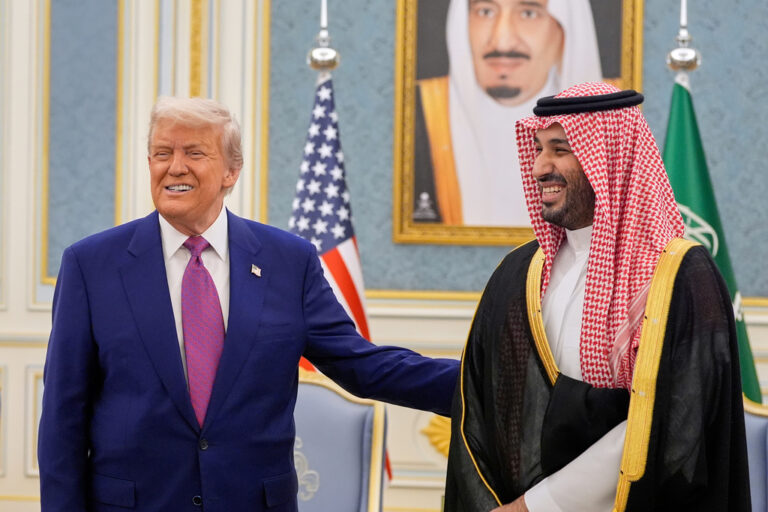
Saudi Arabia has recently agreed to allow U.S. forces to use the King Fahd air base on the western side of the Arabian Peninsula, according to people familiar with the decision. Crown Prince Mohammed bin Salman is now “eager” to restore deterrence and is close to deciding to join the attacks, the sources said. It is only a matter of time before the kingdom enters the war, one of them added. Additionally, according to a New York Times report, Bin Salman is urging President Trump to send ground troops into Iran to seize energy infrastructure.
The United Arab Emirates, meanwhile, has begun cracking down on Iranian?’owned assets-a major financial lifeline for Tehran-while debating whether to send its military into the fight and lobbying against any cease?’fire that leaves parts of Iran’s military intact.
The UAE recently shut down the Iranian Hospital and the Iranian Club in Dubai, according to people familiar with the closures. Phone numbers, WhatsApp channels, and the hospital’s website were offline on Monday. Dubai health authorities confirmed the facility was no longer operating.
“Certain institutions directly linked to the Iranian regime and IRGC will be closed under targeted measures after being found to have been misused to advance agendas that do not serve the Iranian people, and in violation of U.A.E. law,” the government said, referring to the Islamic Revolutionary Guard Corps.
The UAE, which has faced over 2,000 Iranian attacks during the war, has been a major financial hub for Iranian businesses and individuals for years. After Iran began striking its territory, it warned that it could freeze billions of dollars in Iranian assets. Such steps could sharply restrict Tehran’s access to foreign currency and global trade networks.
Although Gulf states publicly insist they are not carrying out attacks on Iran or allowing their airspace to be used for strikes, the reality is more complicated.? Videos verified by Storyful show that some ground?’based missile launches targeting Iran originated from Bahrain. Five U.S. Air Force refueling planes were damaged on the ground at Prince Sultan Air Base in Saudi Arabia after an Iranian missile strike, U.S. officials said.
The U.S. military declined to say whether Arab states were assisting, saying Gulf governments should speak for themselves.
The actions by Saudi Arabia and the UAE highlight how Gulf monarchies are being drawn deeper into the U.S. and Israeli war against Iran, a role they would prefer to avoid.
But Iran is forcing their hand, especially by its blockade of the Strait of Hormuz.
Gulf leaders-especially in the UAE and Saudi Arabia-are urging Trump in frequent calls to finish the job and dismantle Iran’s military capabilities before moving on, Arab officials said. The escalating attacks are also convincing them that they may need to deliver their own response to restore deterrence.
Their confidence in U.S. security guarantees and diplomatic engagement with Iran has eroded. That became clear last week when Iran struck Qatar’s Ras Laffan energy hub, along with key Saudi, Kuwaiti, and Emirati facilities.
The Gulf states are united in their anger toward Iran, officials said, but also frustrated by their limited influence over U.S. decision?’making despite their close security ties and heavy investments in the relationship.
“They’re just caught in this structural bind that weaker parties always have in an alliance with a stronger party,” said Gregory Gause, an analyst of U.S.-Gulf ties at the Middle East Institute in Washington. “If the stronger party is taking bellicose positions, they’re worried that they’re going to be dragged into a war they don’t want to fight.”
(YWN Israel Desk-Jerusalem)