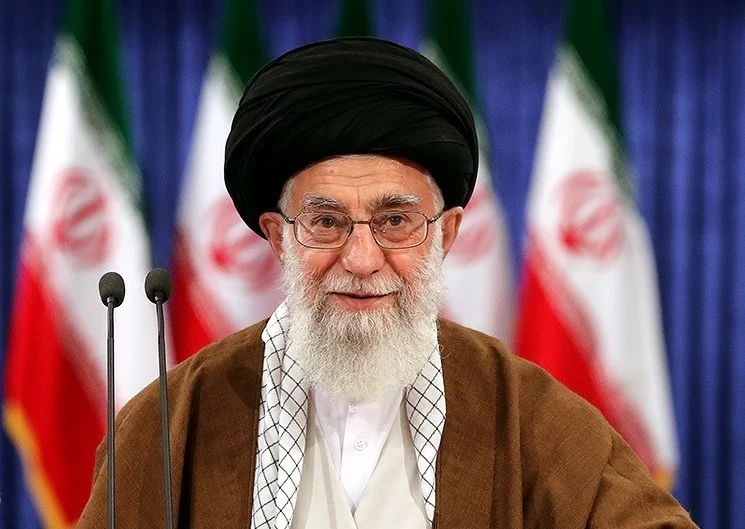
More than six weeks after the killing of Ali Khamenei, Iran’s leadership is sending a message – just not the one it intends.
The continued delay in publicly burying the longtime supreme leader, an extraordinary break from Islamic tradition, is emerging as a revealing signal of instability inside the Islamic Republic, according to analysts and opposition-linked figures. What would normally be a tightly choreographed display of regime continuity has instead turned into a conspicuous absence – one that underscores the fragility of Iran’s current power structure.
Forty-day mourning ceremonies began April 9, a milestone typically marking closure. But officials have yet to disclose burial plans, even after postponing a previously scheduled state funeral in early March. The silence has fueled speculation not just about logistics, but about control.
“This is not a procedural delay. It’s a political one,” said Ramesh Sepehrrad, who argues the regime’s hesitation reflects internal fear. In a system where burial within 24 hours is the norm, the extended delay suggests leaders are wary of public exposure – and potentially of public reaction.
The uncertainty comes at a sensitive moment. Iran’s attempt to reset relations with Washington – through indirect talks mediated by Pakistan in Islamabad – has stalled, with no follow-up negotiations scheduled. That diplomatic impasse is colliding with a leadership transition still unfolding largely behind closed doors.
At the center is Mojtaba Khamenei, the late leader’s son and successor, who is quietly consolidating authority while recovering from injuries sustained in the same strike that killed his father. According to individuals familiar with his inner circle, Mojtaba has resumed participation in high-level decision-making, joining meetings via audio link and weighing in on strategic issues – including negotiations with the United States and ongoing military operations.
But the portrait that emerges is less of a traditional supreme leader and more of a coordinator navigating a fractured system.
“He’s not operating from a position of organic authority,” Sepehrrad said. “He’s operating through the institutions that control force.”
That distinction matters. Unlike his father, who wielded a blend of religious legitimacy and political dominance, Mojtaba appears heavily reliant on a network of security and political figures – including parliamentary leadership, judiciary officials, and senior commanders tied to the Islamic Revolutionary Guard Corps. The result, analysts say, is a system that functions less like a unified government and more like a coalition of power centers bound by shared interests rather than trust.
“This is not one voice,” Sepehrrad said. “It’s multiple channels – one negotiating, one threatening, one enforcing.”
That fragmentation may explain the regime’s dual-track approach: tentative engagement abroad paired with tightening control at home. While Iranian negotiators explored a potential de-escalation framework during the recent ceasefire window, officials have simultaneously signaled a harder domestic posture – with expectations of increased repression, including arrests, executions, and expanded internet restrictions.
The underlying calculation, analysts suggest, is straightforward. External diplomacy can buy time. Internal dissent poses a more immediate threat.
“The regime fears unrest more than it fears failed negotiations,” Sepehrrad said.
(YWN World Headquarters – NYC)