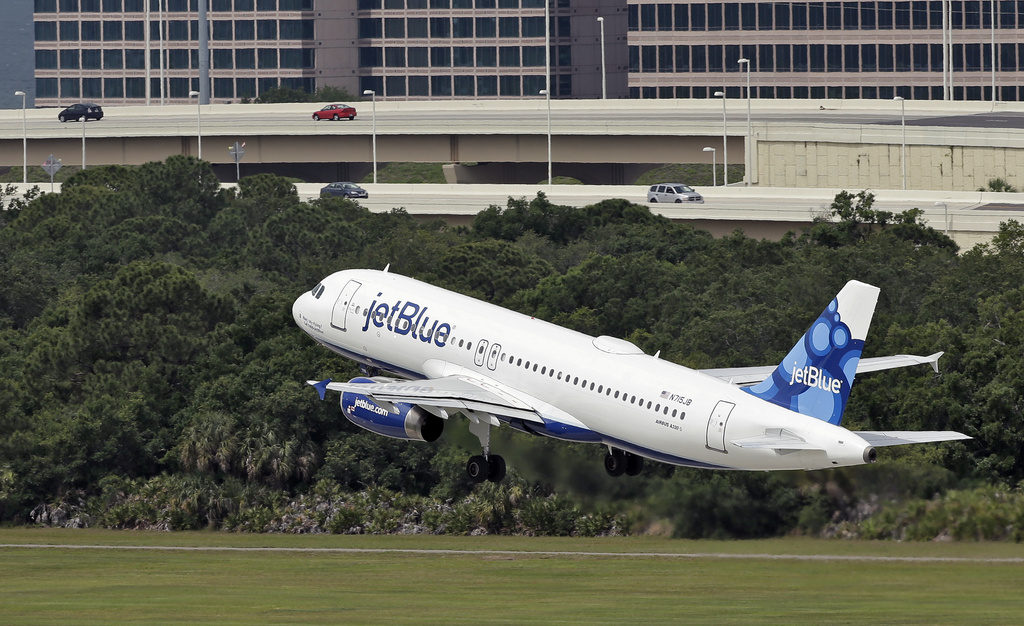
Federal aviation officials and airline engineers are still piecing together what caused a New Jersey-bound JetBlue flight to plunge thousands of feet in late October, injuring at least 15 passengers and forcing an emergency landing. But a new theory circulating among space-radiation experts is pulling the investigation in an unexpected direction.
According to Clive Dyer, a leading British researcher on radiation effects in aerospace systems, the Airbus A320 may have been struck not by a software glitch or turbulence, but by cosmic rays emitted from a supernova in a distant galaxy — high-energy particles capable of scrambling critical microelectronics onboard modern aircraft.
“Cosmic rays can interact with modern microelectronics and change the state of a circuit,” Dyer told Space.com, suggesting that a particle stream may have disrupted the plane’s navigation system. “They can cause a simple bit flip… but they can cause hardware failures too.”
The October 30 flight from Cancun to Newark was cruising normally when it suddenly lost altitude without warning, sending passengers and crew tumbling. Pilots managed to stabilize the aircraft and divert to Tampa, but not before dozens were injured, including several with head wounds.
At the time, Airbus attributed the incident to “intense solar radiation” that interfered with the aging aircraft’s computer systems. But the explanation has not satisfied researchers who say solar activity that week was not nearly strong enough to trigger such a failure.
Dyer’s supernova hypothesis underscores a quiet but persistent concern among aerospace regulators: the degree to which modern aircraft — increasingly reliant on dense, sophisticated microchips — remain vulnerable to naturally occurring radiation bursts that cannot be predicted or shielded against at commercial altitudes.
If cosmic radiation is confirmed as the cause, even indirectly, it would mark one of the most unusual aviation disruptions ever and could inject new urgency into ongoing FAA and industry debates over microchip resilience, redundancy requirements and aging aircraft fleets.
Congress has spent years pressing the FAA to modernize safety systems amid persistent shortages of inspectors and rising reports of near-miss incidents. A failure tied to cosmic radiation — something no airline can control — may complicate calls for more aggressive federal oversight, even as it raises fresh questions about the technological limits of older aircraft still flying major domestic routes.
Cosmic rays are formed when massive stars explode at the end of their life cycles, sending protons across the universe at nearly the speed of light. When those particles strike sensitive circuitry, the result can range from harmless glitches to catastrophic system failures.
Whether that happened aboard JetBlue Flight 227 remains unclear. Neither the FAA nor Airbus has publicly acknowledged the supernova theory, and investigators have not confirmed the exact source of the malfunction.
(YWN World Headquarters – NYC)
 Join the official YWN WhatsApp status