
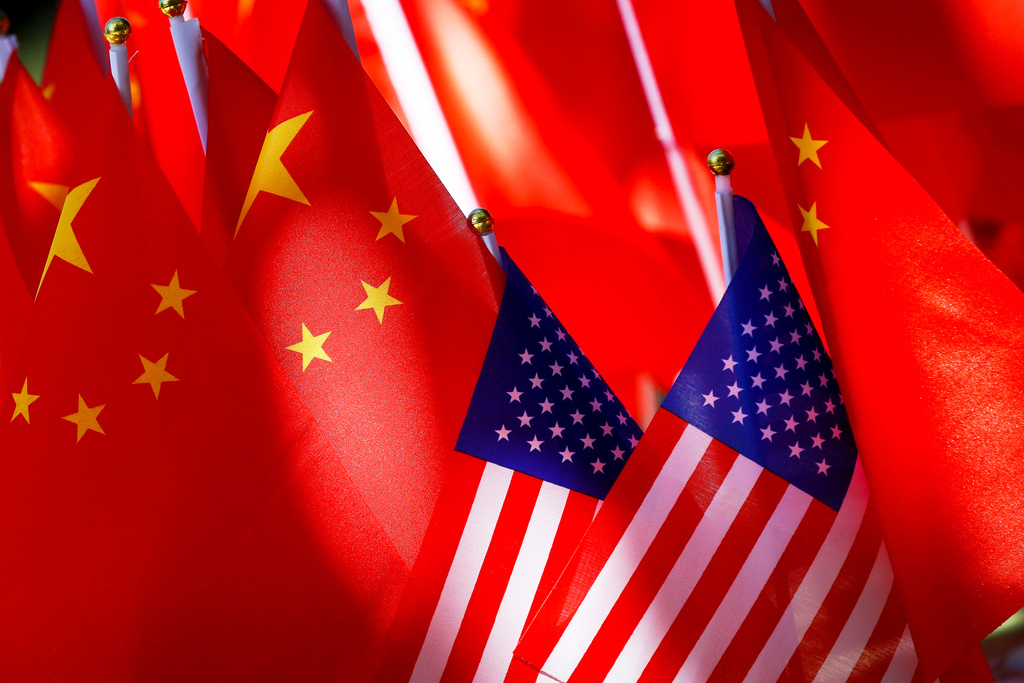
China would likely defeat U.S. forces in a war over Taiwan, according to a top-secret Pentagon assessment that has rattled senior national security officials and raised urgent questions about Washington�s ability to deter Beijing in the Western Pacific.
The highly classified �Overmatch Brief,� first reported by The New York Times, warns that America�s reliance on high-cost, boutique weapons systems leaves it outmatched by China�s ability to mass-produce cheaper, effective platforms at scale. One Biden-era official who reviewed the document reportedly �turned pale� upon realizing Beijing had built �redundancy after redundancy� for �every trick we had up our sleeve.�
Losing Taiwan, Washington�s most critical buffer against Chinese military expansion, would be a strategic and symbolic blow unlike anything the U.S. has faced in generations.
Wargames cited in the brief repeatedly show the U.S. Navy�s crown jewel�the $13 billion USS Gerald R. Ford�destroyed early in the fight, targeted by China�s expanding hypersonic missile arsenal and diesel-electric submarines. Beijing publicly showcased its YJ-17 ship-killing missile this fall, a weapon capable of flying at eight times the speed of sound.
Yet the Pentagon continues pouring resources into traditional platforms, planning nine additional Ford-class carriers even as the U.S. has yet to field a single operational hypersonic weapon.
Inside the Pentagon, frustration is growing. Defense officials acknowledge the U.S. cannot mass-produce high-end systems fast enough, especially as cheap, expendable drones reshape modern warfare from Ukraine to the Middle East. Labor and regulatory costs make it nearly impossible to compete with China�s industrial capacity.
The result: even optimistic Taiwan wargames show the U.S. suffering devastating losses. �You lose 100-plus fifth-generation aircraft, multiple destroyers, submarines, even carriers,� said Eric Gomez, a researcher who participated in a recent simulation. �The cost alone is sobering.�
Meanwhile, cyber vulnerabilities compound the threat. China�s state-sponsored Volt Typhoon group has embedded malware across U.S. military-adjacent power, communications, and water infrastructure, raising fears of a crippling paralysis if war erupts.
Beijing isn�t hiding its intentions. Xi Jinping has ordered the PLA to be ready to seize Taiwan by 2027, calling unification an �historical inevitability.� But U.S. officials believe he will wait until China holds overwhelming advantage, reducing the risk of a failed assault that could end his rule.
Trump, who has maintained Washington�s policy of �strategic ambiguity,� complains about the cost of defending Taiwan but acknowledges its economic importance: roughly one-third of global shipping flows through nearby waters. His new national security strategy stresses the need to restore �military overmatch,� a threshold the new memo suggests the U.S. has not met in years.
The Pentagon, Congress, and the White House now face converging crises: an overstretched industrial base, outdated procurement models, and a rising adversary determined to reshape the global order.
(YWN World Headquarters – NYC)
 Join the official YWN WhatsApp status



3 Responses
It wouldn’t end with a quick Chinese “blitzkrieg”. Taiwanese resistance would continue (note that the Palestinians defeat in 1949 did not end the conflict, and 75 years it is still “hot”). All American assets in China would be seized by the Chinese government, after the United States seized all Chinese assets in the United States. All trade between the United States and China would cease. Any Taiwanese goods that the Chinese try to sell abroad would be seized as stolen property, and sold to fund the Taiwanese government in exile.
Regardless of whether the United States helps Taiwan or stabs them in the back, it would create a serious risk of World War III as China’s allies (Iran, North Korea and Russia) would be encouraged to advance their claims against countries that had been under American protection (the rest of East Asia, Europe, and Israel, among others), and these countries would immediately gear up for a war.
Thank you, presidents Clinton, Obama & Biden for allowing China to Overmatch us!
Very likely fake CCP report forgot to mention US overwhelming advantage in nukes!
If Chicoms sink USS Gerald R. Ford – we nuke them!
Basically the United States has been asleep for the past 3-4 decades?