In a major legal reversal, the Supreme Court ruled in a majority opinion on Tuesday that the government is not required to hold a competitive selection process for the appointment of the Civil Service Commissioner.
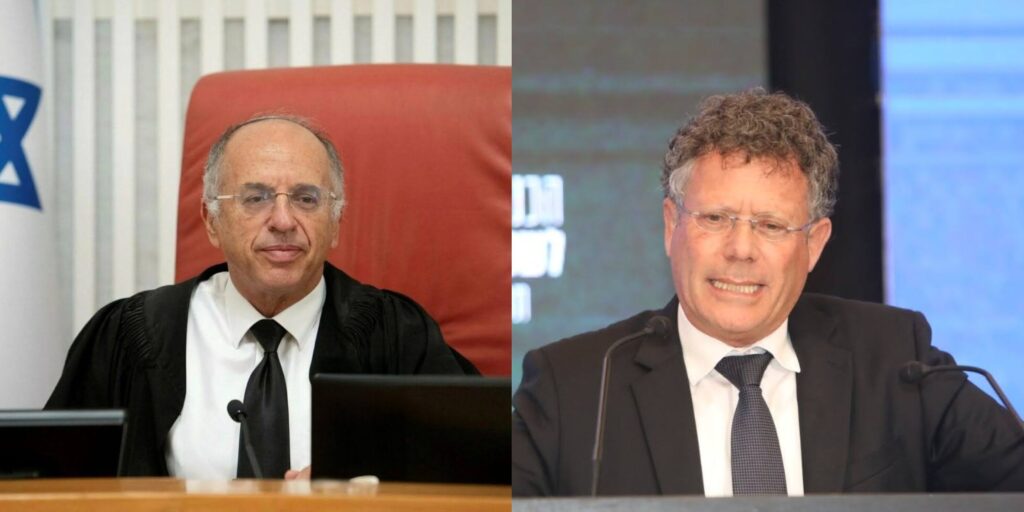
The renewed hearing was held before a five-judge panel. Three justices, Deputy President Noam Sohlberg, David Mintz, and Yael Willner, considered the court’s conservative wing, ruled that there was no basis for judicial interference in the government’s decision to appoint the commissioner through a special appointments committee, as has been customary for the past three decades, prevailing over the positions of left-wing justices Yitzchak Amit and Daphne Barak-Erez.
The ruling overturned the Court’s ruling in August 2024 by a smaller three-judge panel, which had ordered the government to justify why the commissioner�s appointment should not follow a competitive process such as a search committee, a position that aligned with the demand of Attorney General Gali Baharav-Miara. The government refused to accept the intervention in its authorities and demanded a further hearing in an expanded panel, arguing that the requirement was an unprecedented infringement on its constitutional authority.
Sohlberg leveled direct criticism at both Attorney General Gali Baharav-Miara and Justice Amit for their effort to intervene in the government’s authorities, stating, “The manner in which this process concluded demonstrates the need for caution when pursuing sharp policy changes. Great effort was invested from many directions; prices were paid�among them, the prolonged vacancy in the Civil Service Commission�and yet, ultimately, we have returned to our starting point: the appointment method used here for over 30 years. Looking ahead, this outcome�and the long journey that led to it�should be considered by all involved before attempting to change what is established and proven. Changes, even dramatic ones, can be necessary and welcome, but moderation and caution are equally vital.�
Justice David Mintz also sharply criticized the very notion of judicial intervention in the case, stating that the Supreme Court must exercise restraint, stressing that the petition attempted to impose a �desired� legal outcome rather than one grounded in existing law. He stressed that the petitioners failed to identify � even marginally � any legal basis that could justify overturning the government�s decision.
Mintz emphasized that the separation of powers requires judicial restraint and that the Court must not substitute its own judgment for that of the government as long as no clear legal rule has been breached.
By contrast, Amit warned of the “destructive consequences” of the ruling. Amit argued that allowing the prime minister to directly choose the Civil Service Commissioner would inevitably lead to a political appointment of someone who is supposed to serve as a gatekeeper. �When the prime minister, who is a political figure, himself chooses the Civil Service Commissioner� the result is one: a political appointment,� Amit wrote, adding that �those who will pay the price for this are all of us.�
Amit responded to his fellow justices in harsh tones, accusing them of ignoring a changing reality and deteriorating norms of governance. He described the situation as an existential danger to the public system: �Turning a blind eye to changes in reality undermines the very core of the Court�s role�whose task is to guard, and to guard itself, against a reef or an iceberg that could send the ship down to the depths,” he stated.
(YWN Israel Desk�Jerusalem)
 Join the official YWN WhatsApp status