
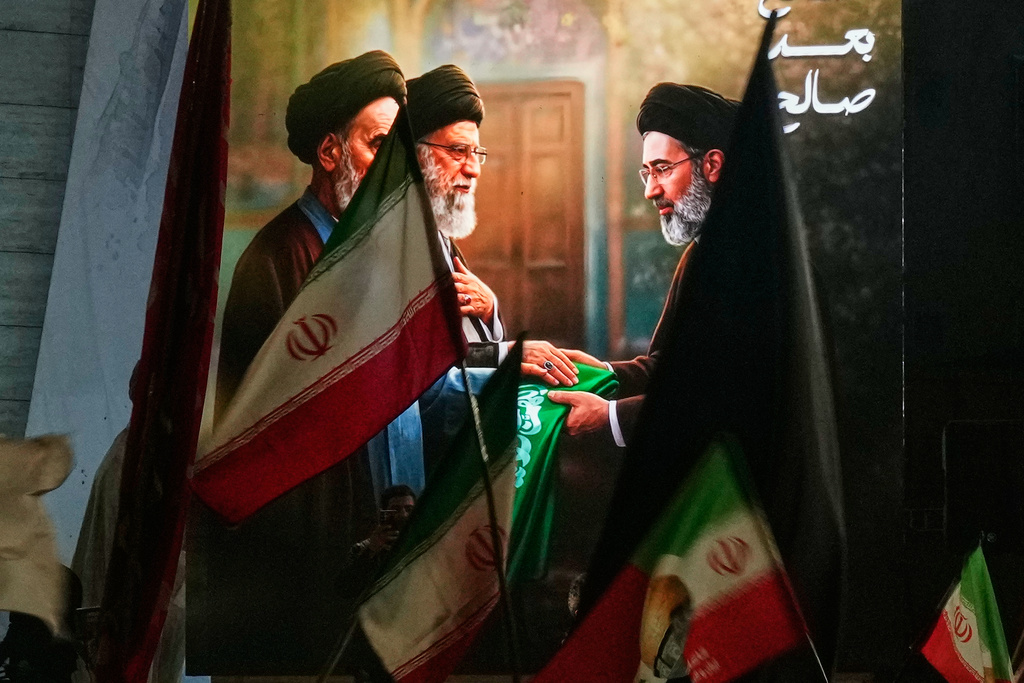
Iran�s newly installed supreme leader, Mojtaba Khamenei, was wounded during the recent war but remains capable of directing the country�s affairs, according to a source familiar with internal assessments who spoke to The Jerusalem Post.
The revelation comes as speculation continues to grow about the health and visibility of the 55-year-old cleric, who assumed power following the death of his father, longtime Supreme Leader Ayatollah Ali Khamenei, during the opening phase of the conflict.
Iranian state television acknowledged on Monday that Mojtaba had been injured. However, the report offered few details about the circumstances of the injury, its severity, or when it occurred. Officials also did not clarify whether the wound had affected his ability to manage the state�s day-to-day affairs.
According to the source familiar with the matter, internal assessments indicate that despite the injury, Mojtaba remains capable of fulfilling his duties and overseeing government operations.
Yet his continued absence from public view has fueled mounting questions both inside and outside Iran.
Since being named supreme leader, no photograph or video of Mojtaba Khamenei has been released�an unusual development for the head of the Islamic Republic and one that has intensified speculation among political observers and Iranian opposition figures.
Critics of the regime argue that the lack of public appearances raises a deeper question: who is truly running Iran?
Some opposition figures have suggested that another senior figure within the regime may currently be exercising real authority behind the scenes, while Mojtaba serves primarily as a symbolic or representative leader.
The uncertainty has only heightened intrigue around a man who for years was already viewed as one of the most powerful yet least visible figures in Iranian politics.
Mojtaba Khamenei, the second son of the late supreme leader, spent decades operating largely behind the scenes. Although he held no formal government office, analysts widely believed he wielded considerable influence within Iran�s clerical, political, and security establishments.
He was particularly associated with powerful factions within the Islamic Revolutionary Guard Corps and conservative religious networks, which helped consolidate his standing within the regime�s inner circle.
For years, many analysts viewed him as a possible successor to his father�a scenario that critics warned could transform Iran�s theocratic leadership into something resembling a dynastic system.
Now, with Mojtaba formally elevated to the country�s most powerful position amid war and geopolitical upheaval, the mystery surrounding his health and whereabouts has added a new layer of uncertainty to an already volatile moment in the region.
Whether the new supreme leader will soon appear publicly�or continue ruling from behind the curtain�remains one of the most closely watched questions in Tehran.
(YWN World Headquarters – NYC)
 Join the official YWN WhatsApp status


