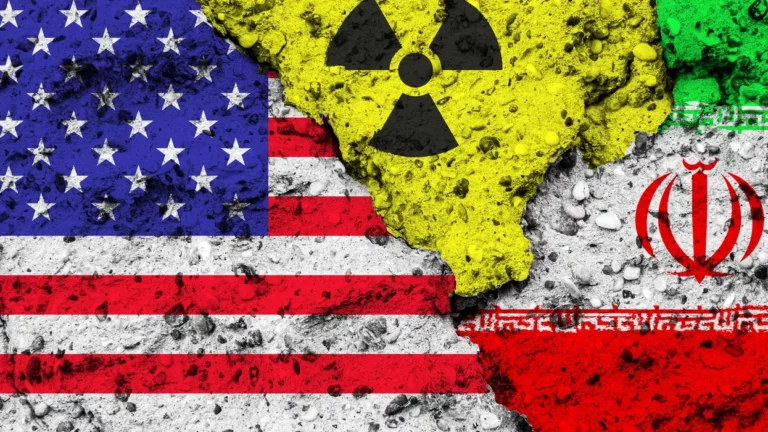
Western officials now assess that the risk of Iran covertly pursuing a nuclear weapon is greater than it was before the United States and Israel first struck Iranian nuclear sites a year ago, an alarming conclusion that undercuts the premise of the military campaign and casts a long shadow over ongoing peace negotiations.
The assessment, reported by Bloomberg and citing Western officials who referenced new data circulated by the UN atomic watchdog, indicates that the risk of Iran secretly advancing a nuclear weapons program is higher today than before the US and Israel launched their first military attacks a year ago.
The finding lands as the Trump administration is pressing Tehran to formally renounce nuclear weapons as part of a deal to reopen the Strait of Hormuz, which have already been repeatedly disrupted by Israeli operations in Lebanon.
The core problem is opacity. Following the 12-day war of June 2025, Iran suspended cooperation with the IAEA. While Iran later resumed inspections at sites unaffected by the strikes, it did not allow the agency to resume inspections at bombed nuclear sites or provide updated nuclear material accountancy reports. The IAEA determined in a November 2025 report that it had lost continuity of knowledge over Iran’s nuclear materials.
That gap in visibility is precisely what has Western officials alarmed. The question remains whether the June 2025 attacks destroyed Iran’s nuclear program or simply forced it into smaller, more secretive pockets of Iran’s web of roughly 30 nuclear sites.
The uranium stockpile issue remains unresolved. U.S. and Israeli suspicions about Iran’s nuclear program are now focused on the ultimate fate of more than 400 kilograms of highly enriched uranium and nuclear enrichment centrifuges. The IAEA’s director general assessed that just over 200 kilograms of 60-percent-enriched uranium is underground at Isfahan, enough material for around five nuclear warheads if further enriched to weapons grade.
The strikes also appear to have hardened Tehran’s calculus on the value of a deterrent. Observers may take the lesson that Iran would not have been attacked had it already possessed a nuclear deterrent. Prominent voices within the Iranian regime are now arguing that Tehran should quit the Nuclear Non-Proliferation Treaty and develop the bomb, according to Reuters.
At the end of the conflict, Iran will retain the nuclear expertise and likely key materials necessary for building a nuclear bomb. Military force cannot eliminate Tehran’s proliferation risk.
The assessment presents a direct challenge to Trump’s public framing. The president said Wednesday in an interview on the New York Post’s “Pod Force One” podcast that Iran has “essentially” agreed not to obtain a nuclear weapon and expressed confidence that talks would “resolve itself fairly quickly.” He has also said the military campaign “essentially defeated” Iran’s forces. But the intelligence picture being shared among Western allies suggests a more complicated reality — one in which a battered Iran, cut off from international inspectors, may have stronger incentives than ever to pursue the very capability that triggered the war.
(YWN World Headquarters – NYC)
 Join the official YWN WhatsApp status