Moldovan authorities said they carried out 250 raids and detained dozens on Monday as part of an investigation into an alleged Russia-backed plan to incite “mass riots” and destabilize the country around a critical parliamentary election.
The raids targeted more than 100 people and took place in multiple localities across the country, police said. Seventy-four people were detained for up to 72 hours, said Victor Furtuna, Moldova’s chief prosecutor from the Office for Combating Organized Crime and Special Cases.
Moldovans will vote to choose a new 101-seat legislature on Sunday, in an election many view as a choice between Moldova’s continued path toward European Union membership or closer ties with Russia.
Moldova’s police said that the unrest plot was “coordinated from the Russian Federation, through criminal elements.”
Furtuna said that most of the suspects “systematically traveled” to Serbia, where they received training and that they were aged between 19 and 45 years old.
The head of Moldova’s police, Viorel Cernauteanu, said that some of the suspects didn’t know the real purpose of their trips, which were presented as pilgrimages, and only later became involved in “training for disorder and destabilization.”
He added that the investigation was “not aimed at political entities, despite interpretations. Rather, it was aimed at documenting the criminal intent and organization of these individuals who traveled to Serbia for training.”
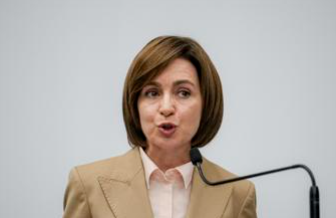
Moldova’s pro-Western President Maia Sandu said in a statement after the raids on Monday that the Kremlin is spending “hundreds of millions of euros” to try to sway the election.
“People are intoxicated daily with lies,” she said. “Hundreds of individuals are paid to provoke disorder, violence, and spread fear. … I appeal to all citizens: we must not allow our country to be handed over to foreign interests.”
She added that the Kremlin “has accomplices here in Moldova,” describing them as people “willing to sell out their country for money.”
Moldovan authorities have long accused Russia of conducting a hybrid war — meddling in elections, disinformation campaigns, illicitly funding pro-Russian parties — to try to derail the country’s path toward European Union membership.
Moscow has repeatedly denied meddling in Moldova.
In the wake of Russia’s full-scale invasion of Ukraine in 2022, Moldova applied to join the EU and was granted candidate status that year. Brussels agreed to open accession negotiations last year. Moldova’s westward shift further irked Moscow and tensions between the two nations skyrocketed.
(AP)
 Join the official YWN WhatsApp status