
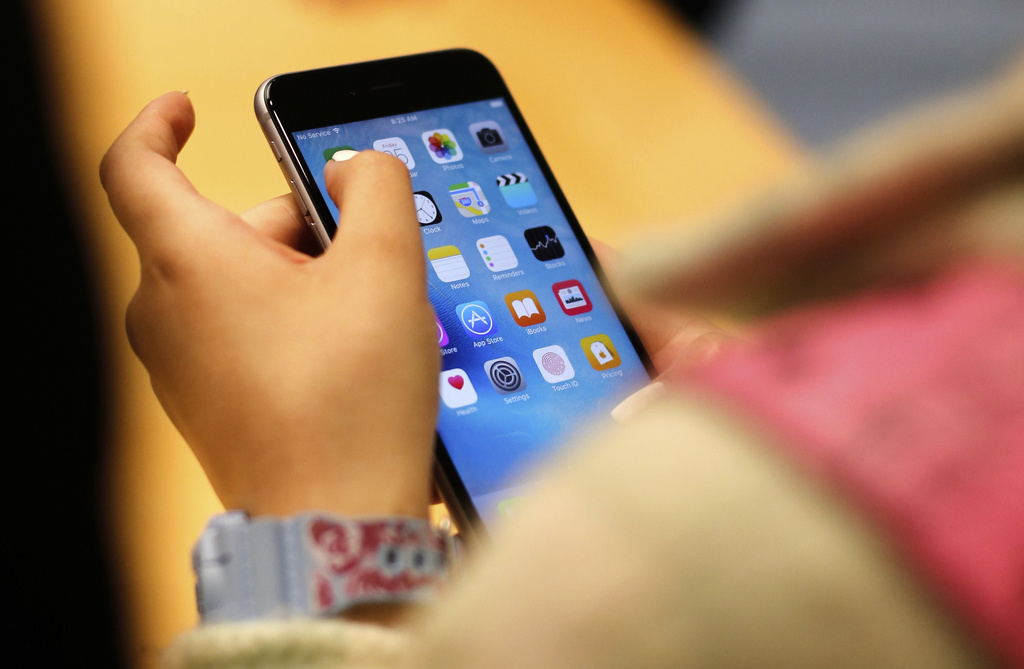
The endless stream of AI-generated sludge — the jump-cut memes, the flashing edits, the weaponized dopamine loops — has become the default soundtrack of childhood. Now, scientists say the digital noise flooding kids’ phones, laptops, and TVs may be doing far worse than shortening attention spans: it may be contributing to a measurable rise in ADHD symptoms across the country.
A major new study from the Karolinska Institute in Sweden and Oregon Health & Science University has found a significant association between social media use and attention deficits among children. The four-year study, published in Pediatrics Open Science, tracked 8,324 children ages 9 and 10, asking them to self-report their daily screen habits while their parents assessed changes in attention and hyperactivity.
What researchers found was that social media alone — not TV, not video games — was strongly linked to growing inattentiveness.
Unlike passive TV watching or immersive video gaming, apps like TikTok, Snapchat, and Instagram bombard users with alerts, algorithmic feeds, and unpredictable “rewards,” a design pattern that researchers say hijacks core attention systems in the developing brain.
“Social media entails constant distractions,” Klingberg said. “Even the thought of whether a message has arrived can act as a mental distraction.”
Over the course of the study, children’s daily social-media use exploded from 30 minutes to 2.5 hours. During the same period, inattention symptoms also climbed — while hyperactivity did not, a split that strongly suggests social media may be uniquely disruptive to sustained focus.
A major question in ADHD research is whether digital distraction causes attention issues or whether kids with attention issues seek out more screen time. This study offers a rare clue.
Children who already showed ADHD symptoms at the start did not go on to use more social media than their peers, meaning the inattentiveness likely followed the screen time, not the reverse.
In researchers’ words: “There was no evidence of reverse association.”
Individually, the effect size is relatively small. But at the population level — with tens of millions of American kids spending hours a day on social platforms designed to monopolize attention — the impact could be enormous.
The U.S. is already experiencing a dramatic spike in ADHD diagnoses: 1 in 9 American children now has ADHD, over 7 million kids had a diagnosis in 2022, and that’s up from 6 million in 2016, according to CDC data.
“Greater consumption of social media might explain part of the increase,” Klingberg said.
The researchers stressed that social media use does not guarantee a child will develop ADHD symptoms — only that the correlation is strong enough to merit caution.
Their advice: parents should actively consider daily limits on their children’s social-media use and keep the conversation open.
“We hope our findings help parents and policymakers make well-informed decisions on healthy digital consumption,” said lead author Samson Nivins.
(YWN World Headquarters – NYC)
 Join the official YWN WhatsApp status








4 Responses
NEW???
And adults brains social media doesn’t turn into a pile of mush? Along with many other ill effects
We survived tape recorders, TV, internet, cell phones, we’ll survive whatever else comes our way.
TL;DR