
Israel’s Health Ministry reported on Sunday that a 7-year-old boy from Jerusalem passed away on Shabbos after contracting measles.
He passed away after arriving at the emergency room due to complications from the disease.
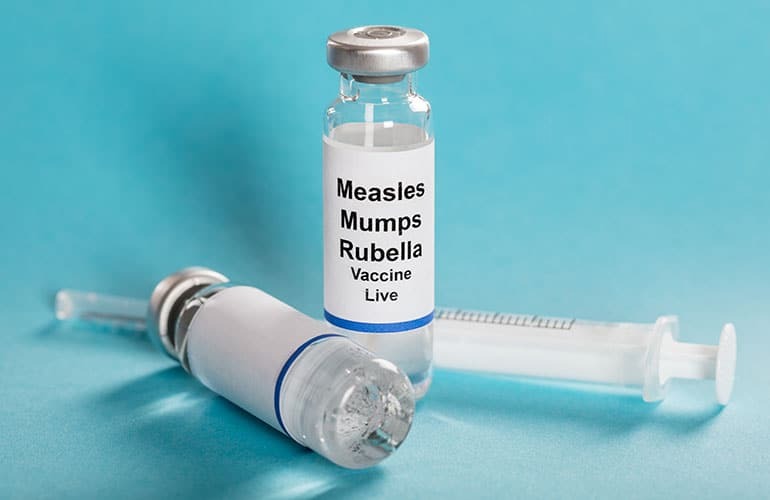
According to the statement, the child, who had an underlying medical condition, had received one dose of the measles vaccine.
This is the ninth death since the measles outbreak began. Until now, all fatal cases were healthy toddlers with no underlying conditions who were unvaccinated.
There are currently 16 hospitalized measles patients, of whom eight are being treated in intensive care.
The areas in Israel that are currently categorized as outbreak zones are Jerusalem, Beit Shemesh, Bnei Brak, Harish, Modiin Illit, Nof HaGalil, Kiryat Gat, Ashdod, Tzfat, Netivot, the Mateh Binyamin Regional Council, and the yishuv of Tekoa.
The ministry’s vaccine recommendations:
- All children should be vaccinated at ages 1 and 6 (as part of the routine vaccination schedule).
- In outbreak areas: advance the second dose to age 1.5.
- An additional vaccine dose is recommended for infants aged 6-11 months in outbreak areas and for those traveling to places with outbreaks.
The Health Ministry recommends that unvaccinated individuals, as well as parents of infants aged six to eleven months who have received only one dose, avoid attending large gatherings in outbreak cities due to the risk of infection.
The ministry stated that “thanks to the ministry’s efforts to increase vaccination coverage, since September–compared to the same period last year–Jerusalem has seen a 500% increase in vaccinations, and Beit Shemesh an even higher rise of 630%.”
“First-dose vaccination coverage (ages 1-6) against measles in Jerusalem rose from 77% to 84%, and in Beit Shemesh from 72% to 82.6%.”
(YWN Israel Desk–Jerusalem)
 Join the official YWN WhatsApp status


2 Responses
The recent rise in measles deaths is becoming increasingly concerning�it echoes the early COVID period, when fear and rigid hospital protocols sometimes led to worse outcomes. Measles begins as a viral infection, but in some very few patients it can progress to severe complications such as viral pneumonia or ARDS (acute respiratory distress syndrome), which are the real dangers.
In the recent Texas outbreak, supportive care focused on early intervention�addressing inflammation and maintaining lung function before patients deteriorated. RFK junior and clinicians used nebulized budesonide, a steroid that reduces airway inflammation, and nebulized glutathione, an antioxidant that can help thin mucus and support the lungs� natural defenses. These treatments aim to keep oxygen levels stable and reduce progression to critical illness.
NO ONE Died. Except for one child and hear what those parents have to say, it wasn�t a result of measles it was a result of neglect intervention.
It�s worth remembering that if doctors simply stopped treating strep throat or bacterial pneumonia, the death toll from these otherwise manageable infections would soar. Early, appropriate treatment saves lives.
Reports suggest that in some places, parents are hesitant to bring children to hospitals, fearing that only limited or delayed interventions are offered once cases become severe. Anyone with connections to Israel should be encouraging timely, appropriate medical treatment at the first signs of complications�because, as with any serious infection, early care makes all the difference.
If you want to talk medical, let�s talk medical � but let�s talk facts, not recycled talking points
Measles provokes a hyper-inflammatory immune reaction with oxidative stress, epithelial barrier breakdown, and a surge of pro-inflammatory cytokines (IL-6, TNF-?, IFN-?). Management during the Texas outbreak incorporated multiple modalities aimed at dampening this cascade and preventing secondary complications:
Nebulized budesonide: delivered directly to the bronchioles, suppressed NF-?B�driven cytokine transcription, reduced airway edema, and improved pulmonary compliance in patients with reactive bronchospasm.
Glutathione support: restored depleted intracellular antioxidant reserves, neutralized viral-induced reactive oxygen species, and protected alveolar epithelium from oxidative apoptosis. Alot of research on nebulizing (100 pure, there is a company thats available in the local health food stores) glutathione USP grade, for acute respiratory issues.
Vitamin A supplementation: corrected infection-induced retinol depletion; retinoic acid enhanced epithelial regeneration, supported mucosal IgA responses, and reduced keratopathy and mortality risk.
Vitamin D optimization: modulated adaptive immunity by tempering Th1/Th17 cytokine storms and upregulating antimicrobial peptides such as cathelicidin and ?-defensin.
Hydration and electrolyte correction: countered insensible fever losses, preserved cerebral perfusion, and reduced risk of encephalopathy and metabolic derangements.
Intravenous immunoglobulin (IVIG): selectively deployed in high-risk patients (immunocompromised, infants, or exposed pregnant women), providing passive antibodies that reduced viral replication and lowered the probability of severe complications.
Empiric antimicrobials: initiated where secondary bacterial pneumonia or otitis media was clinically suspected, with coverage typically aimed at Streptococcus pneumoniae and Staphylococcus aureus.
Supportive respiratory care: from supplemental oxygen to escalation toward mechanical ventilation in cases of severe pneumonitis or impending ARDS.
This layered therapeutic framework directly addressed the immunopathophysiology of measles � oxidative injury, epithelial compromise, and cytokine dysregulation � and in practice resulted in favorable clinical outcomes in the overwhelming majority of pediatric patients during the Texas outbreak.
It is quite clear that when a child progresses to respiratory failure, the issue lies in a failure of timely treatment � a reflection of medical neglect � not in the parents� decision-making. Blaming families for �lack of vaccination� while ignoring evidence-based supportive measures is not science, it�s scapegoating. If you haven�t read a shred of the research on actual clinical interventions, then repeating slogans is not medicine. It�s time this madness ends.
�First-dose vaccination coverage (ages 1�6) against measles in Jerusalem rose from 77% to 84%, and in Beit Shemesh from 72% to 82.6%.�
Mission accomplished..
Whatbnobody realizes it the more the vaccinate the more it’s going around, no one wants to talk about viral shedding