
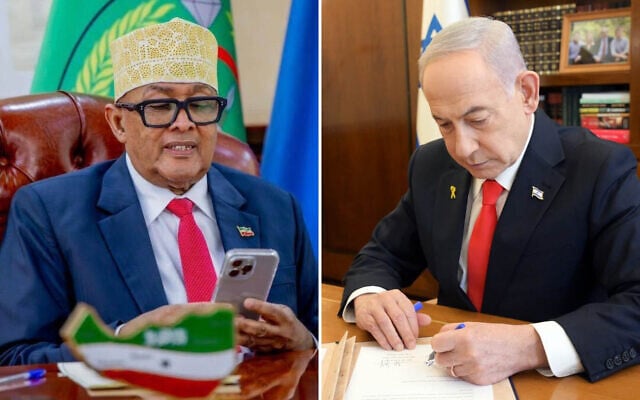
Israel’s decision to recognize Somaliland as an independent state has triggered furious backlash across the Muslim world, exposing fresh geopolitical fault lines and underscoring the quiet but widening divide between Israel’s Abraham Accords partners and much of the region.
A bloc of 21 mostly Muslim countries, including Jordan, Egypt, Saudi Arabia, Turkey, and Iran, as well as the non-state Palestinian Authority, issued a joint statement condemning Israel’s move, warning it could destabilize the Horn of Africa, the Red Sea region, and broader international security.
The statement accused Israel of acting with “full and blatant disregard for international law,” calling the recognition of Somaliland an “unprecedented measure” with “serious repercussions” for regional and global peace. The countries argued that recognizing breakaway territories sets a dangerous precedent that violates the principles of the United Nations Charter.
Notably absent from the condemnation were the three Arab states that normalized relations with Israel under the 2020 Abraham Accords: the United Arab Emirates, Bahrain, and Morocco. Lebanon and Syria also declined to sign the statement.
The abstentions highlighted a growing diplomatic split, as Israel’s newer regional partners quietly distanced themselves from a sweeping denunciation led by traditional Arab powers and Iran. While none of the Abraham Accords states publicly endorsed Israel’s recognition of Somaliland, their refusal to join the condemnation signaled a reluctance to confront Jerusalem directly.
Israel became the first country to formally recognize Somaliland on Friday. Somaliland, a self-governing breakaway region of Somalia since 1991, is not internationally recognized despite maintaining relative stability and functioning state institutions for more than three decades.
In their statement, the 21 countries also rejected any attempts to expel Palestinians from Gaza, an issue they linked directly to Israel’s Somaliland decision. Somaliland has been floated in international discussions as a potential destination for Gazans who emigrate from the war-ravaged Strip–an idea that has fueled outrage across the Arab and Muslim worlds.
The condemnation came as Israel’s war with Hamas in Gaza entered its 814th day, with regional tensions already stretched thin. Critics of Israel argue that the Somaliland recognition reflects a broader strategy of reshaping regional alliances and facts on the ground, while supporters say it rewards stability and counters Iranian influence in a strategically critical corridor near the Red Sea.
(YWN World Headquarters – NYC)
 Join the official YWN WhatsApp status





2 Responses
“The countries argued that recognizing breakaway territories sets a dangerous precedent..” and what about recognising Palestine?
Especially in Africa, there is a serious aversion to altering the colonial boundaries since the existing stakeholders have a strong interest in the colonial boundaries, no matter how silly they are. Globally, there are a great many countries with regions or provinces who have good reasons to “breakaway”, including Quebec, Taiwan, Scotland, and according to the Russians, Ukraine – so recognizing one “break away” could open the door to many us (remember how the United States reacted to a breakaway region 160 years ago).
Trump is probably the world leader most likely to support a breakaway region. Somaliland (former British Somaliland) has a very different political tradition from the former Italian Somaliland (whose main exports are refugees and terrorists), and is substantially more pro-western than most other countries in the region.