
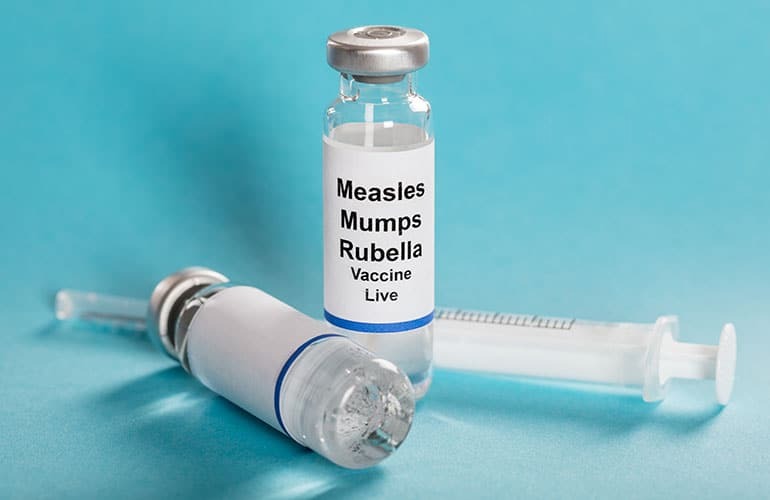
An 11-month-old infant with no underlying medical conditions died Thursday evening in Jerusalem from complications related to measles, according to Hadassah Ein Kerem Hospital.
The hospital said the infant, who had not yet been vaccinated, was transferred Wednesday from another medical center in critical condition. She was admitted to the pediatric intensive care unit and connected to an extracorporeal membrane oxygenation (ECMO) machine as doctors attempted to stabilize her condition. Despite intensive treatment, her condition deteriorated and she was pronounced dead on Thursday.
The case comes amid a rise in measles-related fatalities in Israel, with officials noting that most recent deaths have involved previously healthy, unvaccinated infants.
The Israel Health Ministry reiterated its vaccination guidance: children should receive two doses of the measles, mumps, and rubella (MMR) vaccine–one at 12 months of age and a second in first grade, typically around age six.
In areas experiencing outbreaks, the second dose has been advanced to 18 months. For infants aged 6 to 11 months who are traveling to or residing in outbreak areas, the ministry recommends an additional, non-routine booster dose, followed by the standard doses at the appropriate ages.
Measles is a highly contagious viral illness spread through airborne droplets produced by coughing or sneezing. Health officials say more than 90% of unvaccinated individuals exposed to the virus are likely to become infected. Symptoms usually appear about two weeks after exposure and include high fever, runny nose, dry cough, red eyes, and a rash that typically begins on the face and spreads downward.
While most patients recover within several days, measles can lead to serious complications, particularly in infants, pregnant women, and people with weakened immune systems. Complications may include pneumonia, encephalitis, and, in rare cases, subacute sclerosing panencephalitis (SSPE), a progressive and fatal brain disorder that can develop years after the initial infection.
Under Israel’s routine immunization schedule, infants under one year of age are not typically vaccinated against measles. However, early vaccination between six and 12 months may be considered after confirmed exposure or prior to international travel.
Health officials stress that early doses do not replace the routine vaccinations, which must still be administered later.
(YWN World Headquarters – NYC)
 Join the official YWN WhatsApp status





One Response
The wicked parents who refuse to vaccinate their children often make the claim “what is it to you if I do not vaccinate my child. you do whats best for yours and I will do whats for mine.” Here is the evidence undermining the argument. This child, like all children under one, was too young to be vaccinated. Had this child not been exposed to an unvaccinated child, she would still be alive. Those reshayim who brought measles back by refusing to vaccinate so that measles could kill this child will pay for their rishus.