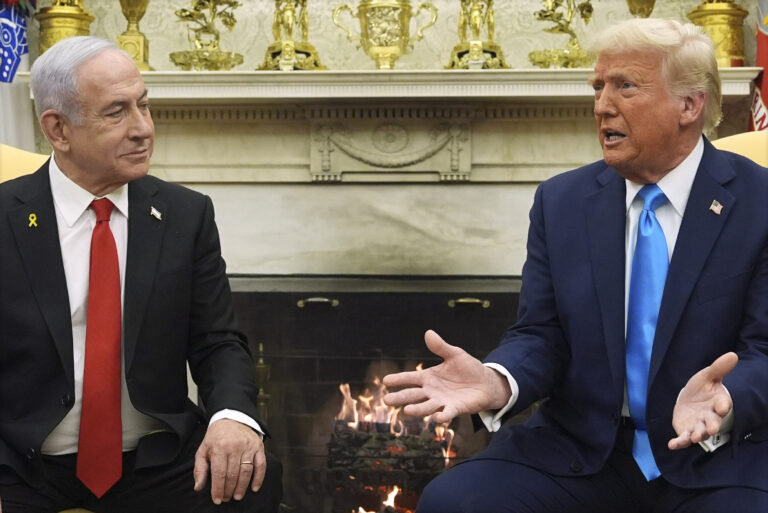
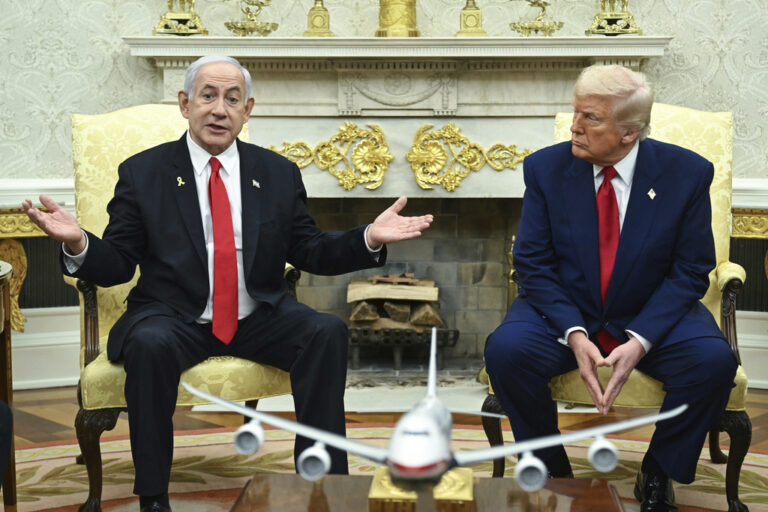
Prime Minister Binyamin Netanyahu told President Donald Trump that Israel will not be bound by the Lebanon clause in the US-Iran deal and made it clear that it cannot agree to any agreement that limits its freedom to act against Hezbollah.
Defense Minister Yisrael Katz said on Monday morning that “Prime Minister Netanyahu and I are leading a clear policy under which the IDF will remain in the security zones in Lebanon, Syria, and Gaza for an unlimited period of time in order to protect Israel’s border and communities from jihadist elements. The area will be free of local residents. This is the main lesson of the October 7 massacre. We oppose an IDF withdrawal from Lebanon, despite all the existing pressures and those that will come in the future.”
“Netanyahu made these points clear to U.S. President Trump and to other senior American officials, and I also made them clear yesterday to U.S. Secretary of Defense Pete Hegseth,” Katz concluded.
Netanyahu convened the security cabinet late Sunday night to discuss the implications of the agreement, focusing primarily on the Lebanon clause.
Yisrael Hayom reported that the ministers unanimously demanded that Netanyahu exact a heavy price from Hezbollah or Iran for every shot fired toward Israel, despite the agreement.
Energy Minister Eli Cohen said, “Don’t cut the rope with Trump, but the response must be clear. If we’re already responding, we must create deterrence.”
Settlements Minister Orit Strock said, “Thank you, Prime Minister, for standing firm in this test. We need to make them pay a price that won’t make it worthwhile for them.”
Minister Itamar Ben Gvir added, “We need a little of Mojtaba’s stubbornness. Every attack on Israel is a declaration of war against us, and we must respond disproportionately.”
Netanyahu made a firm decision to separate the various fronts and maintain Israel’s presence in southern Lebanon. The IDF will remain in southern Lebanon and continue its operations there. If Hezbollah launches attacks into Israel, the IDF will exact a heavy price not only near the border but deep inside Lebanon as well.
The cabinet also agreed to proceed according to the framework proposed by U.S. Secretary of State Marco Rubio, under which Lebanese army forces would deploy in areas vacated by the IDF if Hezbollah withdraws north of the Litani River. If Hezbollah refuses to do so, the IDF will continue operating in southern Lebanon.
All cabinet ministers supported the policy of exacting a price from Hezbollah every time it attacks Israeli territory, even if doing so results in continued friction with Trump.
National Security Minister Itamar Ben Gvir slammed the agreement, saying, “Trump’s agreement does not bind us. Israel is obligated to protect its citizens and soldiers. Israel is not subordinate to the United States, and we are an independent and sovereign state. My position is clear: We are not parties to this agreement, which does not safeguard our security, and it does not bind us in any way.
“We must not settle for anything less than the dismantling of Hezbollah. We must not withdraw from any territory our soldiers have conquered and cleared of terrorist infrastructure. We must not return to a situation in which thousands of terrorists sit along the fences of northern communities, and we certainly must not remain silent for even a moment in the face of attacks on the State of Israel.”
Blue and White chairman Benny Gantz also slammed the deal and used the opportunity to score political points. “Under no circumstances should we agree to restrictions on Israel’s freedom of action in Lebanon or to a withdrawal that would endanger the residents of the north,” he said.
“The emerging agreement with Iran appears to be a strategic failure that will require Israel to wage a diplomatic, military, and legal struggle in the years ahead—one that can only be led by a broad Zionist government.”
(YWN Israel Desk—Jerusalem)
 Join the official YWN WhatsApp status