
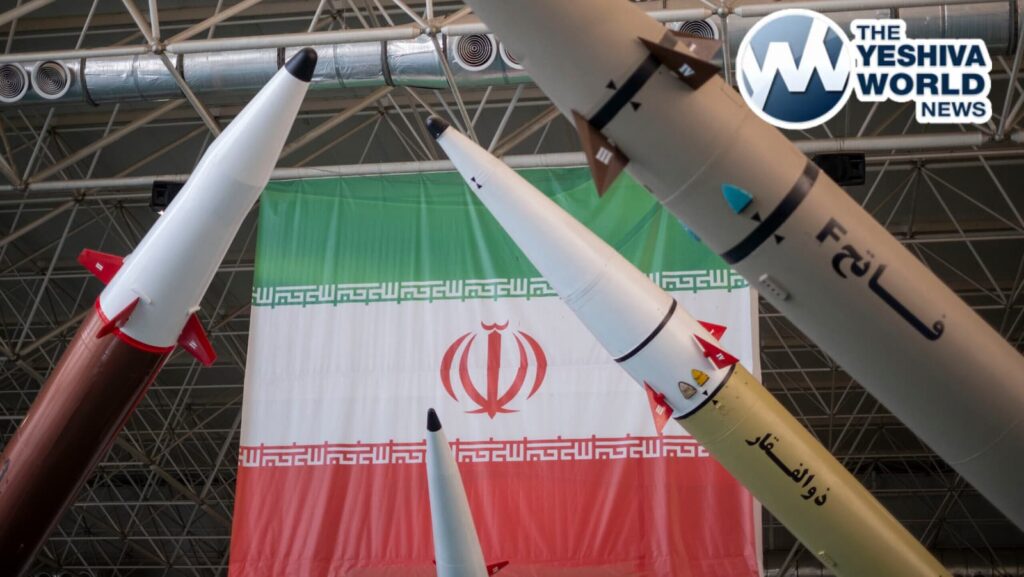
A classified intelligence assessment completed just days before the United States and Israel launched their war against Iran warns that even a sweeping U.S. military assault would be unlikely to topple the country’s entrenched ruling establishment.
The report, produced by the National Intelligence Council, concluded that Iran’s clerical and military institutions are structured to preserve continuity of power even if the country’s top leadership is killed, according to three people familiar with the document who spoke to The Washington Post.
The assessment raises serious questions about Trump’s stated goal of dismantling Iran’s leadership and installing a new government after the war that began Feb. 28.
According to the report, analysts examined several scenarios, including a targeted campaign against Iran’s top leaders and a broader assault on the country’s governing institutions. In both cases, the intelligence community concluded that Iran’s power structure would likely survive.
Even if Supreme Leader Ali Khamenei were killed, Iran’s clerical and military elites would move quickly to fill the vacuum through established succession protocols designed to maintain regime stability.
The possibility that Iran’s fragmented opposition could seize power was deemed “unlikely,” the people familiar with the report said.
The National Intelligence Council represents the consensus judgment of analysts drawn from across the U.S. intelligence community’s 18 agencies.
Despite the intelligence community’s caution, administration officials say the campaign — dubbed Operation Epic Fury — is achieving its objectives.
“President Trump and the administration have clearly outlined their goals: destroy Iran’s ballistic missiles and production capacity, demolish their navy, end their ability to arm proxies and prevent them from ever obtaining a nuclear weapon,” White House spokeswoman Anna Kelly said in a statement. “The Iranian regime is being absolutely crushed.”
With Khamenei killed in the opening phase of the war, the succession process anticipated in the intelligence report is now unfolding under the strain of continued bombing.
Iran’s constitution assigns the power to select the supreme leader to the Assembly of Experts, a powerful clerical body. But the Islamic Revolutionary Guard Corps and other security institutions also play a decisive role in shaping the outcome.
Speculation has centered on Mojtaba Khamenei, the late leader’s son, as a potential successor, though no official decision has been announced.
According to Western officials, the Revolutionary Guard has pushed for Mojtaba’s elevation but has faced resistance from other power brokers, including Ali Larijani, secretary of Iran’s Supreme National Security Council.
Trump has continued to call for Iran’s “unconditional surrender” and has suggested that the United States should help shape the country’s political future.
The president has publicly dismissed Mojtaba Khamenei as “incompetent” and said Washington should help guide Iran toward what he called “a good leader.”
“We want them to have a good leader,” Trump told reporters. “We have some people who I think would do a good job.”
Iranian officials have rejected the idea outright.
“The fate of dear Iran … will be determined solely by the proud Iranian nation,” said Mohammad Bagher Ghalibaf, Iran’s parliament speaker.
(YWN World Headquarters – NYC)
 Join the official YWN WhatsApp status





2 Responses
We all know that the “clerical” bodies are the problem in Iran. The Quran commands endless times to murder all non-believers. It’s that simple. The “clerical” bodies need to be treated as enemy command structures, and vaporized, perhaps more importantly than the “military” structure. Everyone knows this- just saying the quiet part out loud.
All these intelligence may have strong importance, but at the end of the day, their defacto leaders have
1. yet to title a supreme leader
2. Crazy public bickering and inner fighting going on between the leaders themselves.
3. they have become paranoid to the extent their fighting capabilities seem to have been quite affected by this.
All put together, it may not directly lead to Trumps desire of regime change, but it paints a picture of it being much easier than these intelligence reports do…