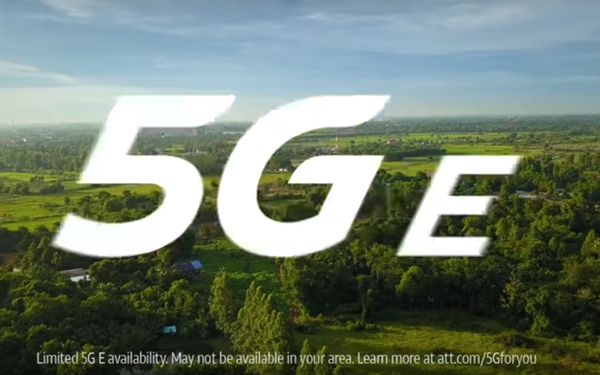
5G E? 5G Plus? 5G Ultrawideband? Will the real 5G please stand up?
AT&T has drawn ridicule by relabeling the network used by some of its phones as “5G E” to signal that the next-generation wireless network is here. Problem is, phones capable of connecting to 5G aren’t coming for another few months, and a national 5G network won’t be deployed until 2020 or 2021.
But Verizon, which complained Tuesday about AT&T’s move, did something similar when it launched a residential wireless service with the 5G moniker using its own proprietary technology. Although there are now industry standards specifying exactly what 5G networks must meet, dubbed “5G NR,” there are still some grey areas, particularly when it comes to marketing. Carriers are using all tools at their disposal as they race to try to convince consumers they’ll be “first” with 5G.
A new generation of wireless network comes along every several years, so the stakes are high for carriers to establish their dominance. When it’s fully deployed, the “5G” network is expected to give mobile users faster speeds for video, self-driving cars and connected devices at home as demand for these ramps up.
IDC analyst Jason Leigh said labeling 5G is a “battle between marketers and engineers,” as they try to balance hype and reality.
There’s a history of carriers being murky about network claims. AT&T, T-Mobile and Sprint started calling an enhanced 3G network 4G in the early 2010s. There’s more pushback this time because people are now more aware of what a next-generation network can do.
AT&T said in December that it would offer a “5G Evolution” service to some of its newest Android phones in 400 markets. The “5G Evolution” service is essentially the existing 4G network with some added features that can boost speeds, technology similar to what Verizon and T-Mobile have also rolled out under different names. That’s separate from the standards-based 5G network that AT&T and others are building.
Bob O’Donnell from Technalysis Research said AT&T’s “5G E” network may be slightly faster than the current 4G service but it is more like “4.5G” than “5G.”
“It’s not really 5G, and it’s very confusing to people,” he said. “I’m not very sure what the logic was to be honest.”
On Tuesday, Verizon launched a marketing offensive pushing back on the “5G E” label with full-page ads in The New York Times, The Wall Street Journal and elsewhere.
“The potential to over-hype and under-deliver on the 5G promise is a temptation that the wireless industry must resist,” Verizon chief technology officer Kyle Malady wrote in the ad. Malady also said Verizon wouldn’t “call our 4G network a 5G network if customers don’t experience a performance or capability upgrade that only 5G can deliver.”
Still, Verizon itself rolled out a 5G wireless broadband service in four cities in October using its own proprietary technology rather than industry-based standards. This residential service is meant to compete with cable rather than offer cellular connectivity outside the home. Verizon plans to update the equipment once standards-based devices are available, but there’s no timeline for that.
Verizon spokesman Kevin King said comparing Verizon’s 5G service to AT&T’s move is a mistake because Verizon has been clear that it wasn’t using standards-compliant equipment right away.
T-Mobile CEO John Legere, meanwhile, tweeted a tongue-in-cheek video showing T-Mobile’s LTE network symbol on a phone replaced with a piece of tape reading “9G.”
AT&T declined to comment about the pushback.
While there aren’t any legal ramifications in calling AT&T’s latest network 5G E, there’s a risk in alienating customers, said Leigh, the IDC analyst.
“They’re entitled to call their product whatever they want,” Leigh said. “Ultimately they’ll have to deal with any confusion from a customer perspective.”
(AP)
 Join the official YWN WhatsApp status