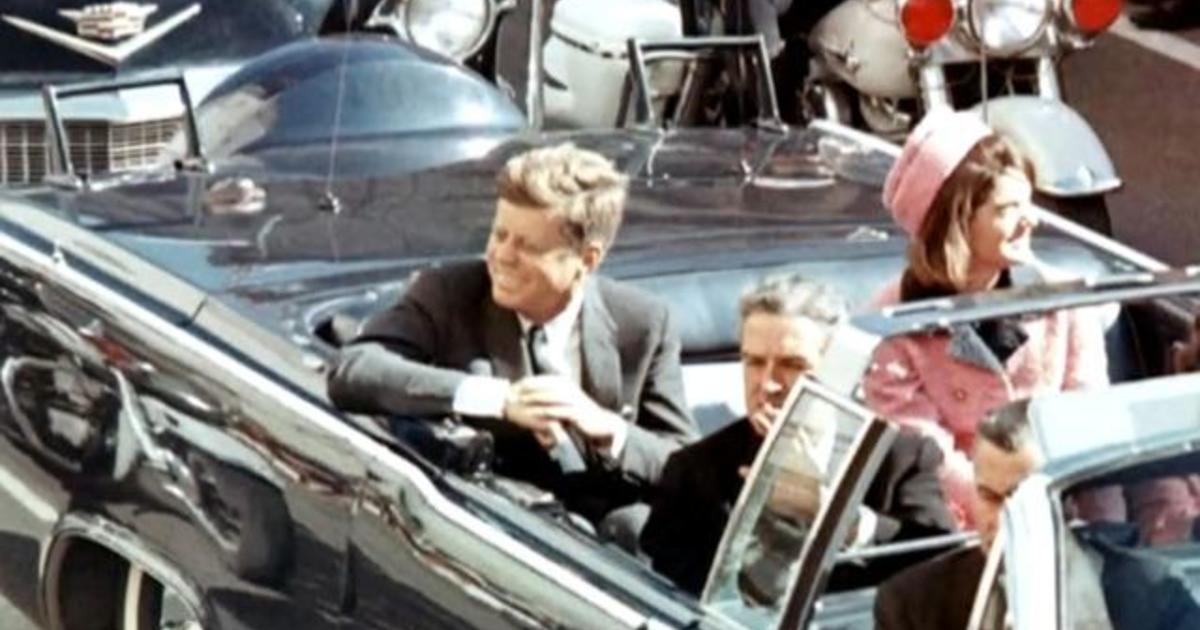
A grainy strip of 8mm home-movie film — shot by a Dallas air-conditioning repairman moments after President John F. Kennedy was struck by gunfire — is back at the center of one of America’s most enduring political mysteries.
A federal judge this month cleared the way for a long-stalled legal fight that could force the government to account for its handling of the so-called Nix film, a largely unseen recording that points directly at the “grassy knoll,” the location that has fueled speculation for decades that Kennedy’s assassin did not act alone.
The ruling revives a lawsuit brought by the granddaughter of Orville Nix, who captured the footage in Dealey Plaza on Nov. 22, 1963, and whose film disappeared into a maze of private contractors, congressional investigators and federal agencies more than 40 years ago. The family says the government took the film without compensation, and that modern forensic tools could now extract evidence unavailable to investigators in the 1970s.
At stake is not only the fate of a piece of celluloid, but whether the federal government can be compelled to disclose what it knows — or doesn’t — about the most scrutinized murder in American political history.
Unlike the famous film shot by Abraham Zapruder, which shows the fatal head shot from behind the presidential limousine, Nix’s camera was trained toward the knoll, capturing first lady Jacqueline Kennedy climbing onto the back of the car and the wooden fence behind which some witnesses believed shots originated.
The film was last publicly accounted for in 1978, when it was sent to a Los Angeles firm for analysis during the investigation by the House Select Committee on Assassinations. Since then, its whereabouts have been contested. The National Archives has said it holds only a copy. Federal agencies deny possessing the original.
Nix died in 1972. His granddaughter, Linda Gayle Nix Jackson, has carried forward a legal campaign begun by her father to recover the footage or be compensated for its loss. In a Jan. 15 order, Judge Stephen Schwartz of the Court of Federal Claims allowed discovery to proceed, opening the door to subpoenas and sworn testimony from government custodians.
The family’s lawyers argue that advances in optics and artificial intelligence could allow today’s analysts to see details invisible to investigators nearly half a century ago.
“It’s the only known film that captures the grassy knoll right as the assassination occurs,” said Scott Watnik, an attorney for Nix Jackson. He said new technology could bolster findings by the House committee, which concluded in 1978 that Kennedy was “probably assassinated as a result of a conspiracy.”
That conclusion clashed with the earlier findings of the Warren Commission, which determined that Lee Harvey Oswald acted alone. The FBI later criticized aspects of the House panel’s acoustic analysis, and the government has long treated the lone-gunman conclusion as settled.
The lawsuit rests on the Fifth Amendment’s takings clause, which bars the government from seizing private property without “just compensation.” But the case collides with the 1992 JFK Records Act, which granted the federal government ownership of assassination-related evidence while mandating eventual public release.
Lawyers peg the film’s value at up to $930 million, based on compound interest calculations tied to the $16 million valuation awarded to the Zapruder film in 1999, a figure that reflected its singular historical importance.
Government attorneys are expected to challenge both the valuation and the premise that compensation is owed at all, arguing that the Records Act governs custody of assassination materials.
(YWN World Headquarters – NYC)
 Join the official YWN WhatsApp status