
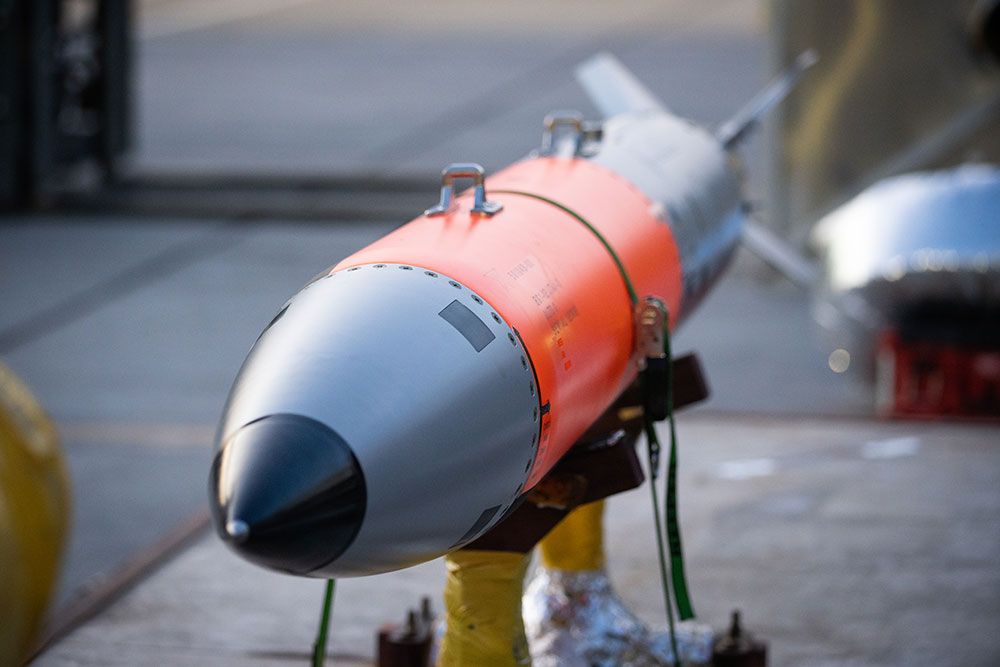
German Chancellor Friedrich Merz is floating a once-unthinkable idea in European security: whether Germany should help build — or even field — nuclear weapons of its own as part of a broader effort to strengthen Europe’s atomic deterrent.
Speaking before the Bundestag, Merz said Berlin is holding early-stage discussions with partner nations about expanding Europe’s nuclear umbrella beyond its current pillars, United Kingdom and France.
“These talks are taking place,” Merz told lawmakers, emphasizing that they remain preliminary and that no decisions are imminent. Any move, he added, would not “conflict with nuclear-sharing with the United States of America.”
The remarks mark a striking shift in tone for a country that has spent decades anchoring its security posture to U.S. guarantees and strict nonproliferation commitments. They also underscore how President Donald Trump’s second term is forcing European capitals to reassess assumptions about American reliability inside NATO.
For much of the postwar era, Europe’s nuclear deterrence has rested on Washington’s arsenal, supplemented by British and French warheads. But Russia’s aggression and renewed doubts about U.S. staying power have pushed leaders to explore alternatives that would have been politically radioactive just a few years ago.
Germany is formally barred from developing nuclear weapons under the 1990 “Two Plus Four” agreement that paved the way for reunification, and it is also a signatory to the Nuclear Non-Proliferation Treaty. Merz acknowledged those constraints but argued they do not prohibit consultations with allies about Europe’s long-term security architecture.
“We have obligations,” he said, “but those obligations do not prevent us from talking with our partners.”
That view is gaining traction within Berlin’s security establishment. Thomas R�wekamp, the head of the Bundestag’s defense committee, said Germany lacks missiles and warheads but could still play a decisive role.
“We have a significant technological advantage that we could contribute to a joint European initiative,” R�wekamp told Welt TV.
The debate comes months after London and Paris agreed to deepen coordination between their nuclear forces, pledging closer cooperation to deter what they described as “extreme” threats to the continent. The move was widely interpreted as a hedge against the possibility that Washington could scale back its military footprint in Europe.
According to the Arms Control Association, Britain maintains roughly 225 nuclear warheads, while France is believed to have around 290. The United States keeps about 100 nuclear weapons stationed in Europe, most of them at American bases in Germany under NATO’s nuclear-sharing arrangements.
(YWN World Headquarters – NYC)
 Join the official YWN WhatsApp status


5 Responses
Ironically the risk is that Germanistan may use it’s military power in support of Israel enemies
The United States agreed to protect Ukraine in return for Ukraine giving up nukes. The United States has recently threatened to invade a NATO member, and has raised significant tariffs to coerce their NATO allies to “kow tow”. If the American guarantees to Germany (and Europe) can no longer be trusted, the alternatives for Germany (and the rest of Europe) are to develop nukes, or submit to control by the Sino-Russian Axis.
??????
Who says that Germany was the “Bad Guy” in World War I? They were on the side of the assassinated Archduke Franz Ferdinand. While Great Britain and the United States ended up on the side of the assassin
What made Germany the “bad guy” in ww1?
The Victors? Or the writers, write history
#lusitania #rmslusitania #lusitaniascandal #rememberthelusitania