
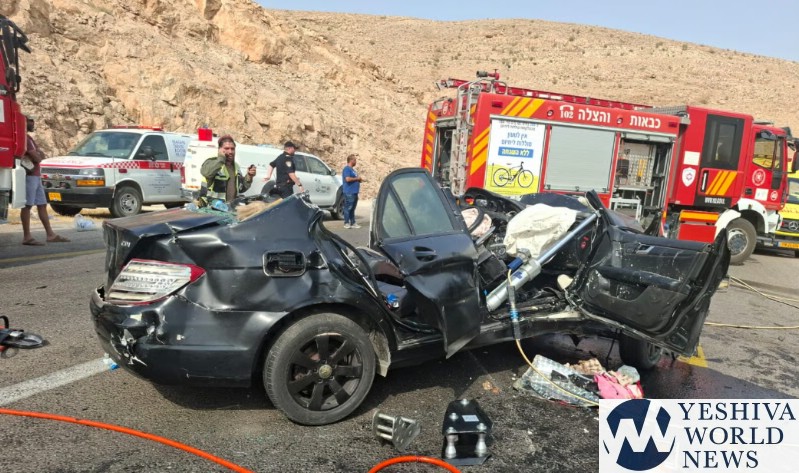
As Israel marks more than 800 days of war, another deadly front has quietly eclipsed even battlefield losses: the nation�s roads.
With 443 people killed in traffic accidents since the start of 2025, Israel is now facing its deadliest year on the roads in two decades, according to figures released by the National Road Safety Authority (NRSA).
With two weeks still left in the year, the toll has already surpassed last year�s grim total of 438 fatalities and now stands at its highest level since 2005.
The surge has been relentless � and lethal.
Six people were killed in traffic incidents in just the past week. Among them: a woman in her 60s struck by a bus; a young man from Beit Shemesh who pulled over after a tire puncture and was killed on the shoulder of a highway; a three-year-old Bedouin girl run over by a car; an 18-year-old girl killed in an off-road crash; a former professional soccer player; and a Hatzalah paramedic who died while riding his motorcycle home.
The data shows that in 2025, 118 pedestrians were killed, 142 drivers, 95 motorcyclists, and dozens more on electric scooters, bicycles, buses, tractors, and trucks. The carnage cuts across every sector of Israeli society.
The NRSA, tasked with coordinating Israel�s fight against traffic deaths, has been steadily hollowed out. Though its founding mandate called for an annual budget of NIS 550 million, the agency today operates on just NIS 60 million � barely a tenth of what was promised.
A long-delayed national road safety plan, approved only last month after months of political foot-dragging, remains largely unimplemented.
At a Knesset emergency conference, NRSA Chairman Yoram Halevy delivered what many viewed as a resignation speech, admitting bluntly: �I failed in my role.� He warned that without authority, manpower, or funding, the agency is incapable of reversing the deadly trend.
The police Traffic Division is in no better shape. Israel has just one patrol car for every 180 kilometers of intercity roads � compared to the OECD average of one per 10 kilometers. Senior police officials say they are short nearly 100 trained officers, leaving vast stretches of highways effectively unmonitored.
Faced with collapsing enforcement, Transportation Minister Miri Regev has opted for harsher penalties rather than systemic reform. Beginning this month, drivers caught using their phones face instant NIS 10,000 fines � no court hearing required � and vehicle confiscation for repeat offenses.
Regev says international consultations showed that �enforcement and punishment� reduce accidents. Critics counter that punishment without enforcement is little more than a press release.
(YWN World Headquarters – NYC)
 Join the official YWN WhatsApp status


One Response
1) Cell phones
2) Road Rage
3) Impulsive driving
All 3 are lethal & connected to these staggering statistics