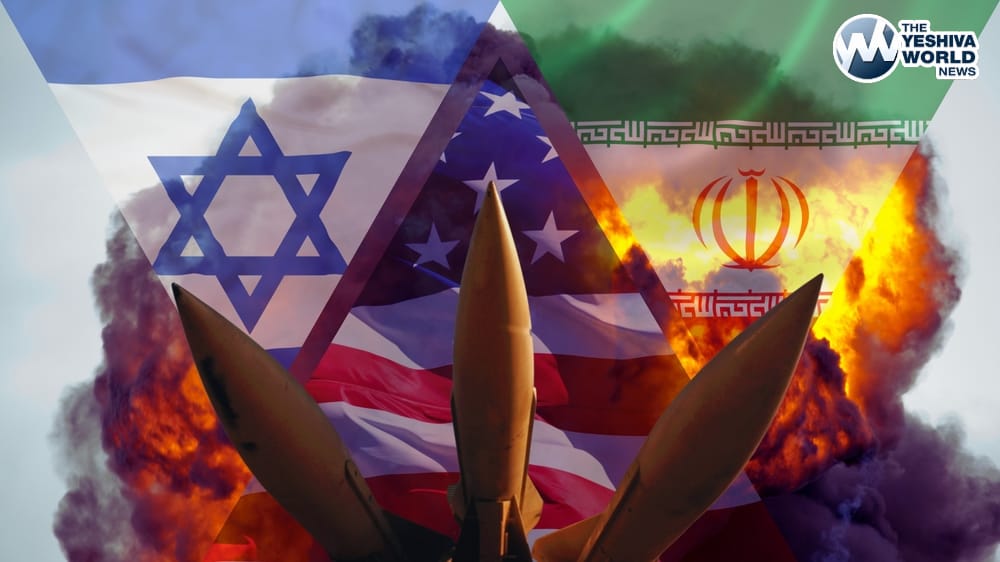
Iran�s Islamic Revolutionary Guard Corps (IRGC) said Wednesday that the country�s missile stockpile has expanded and its forces are at �peak readiness,� signaling Tehran�s determination to project military strength amid rising tensions with Washington and ongoing domestic unrest.
Majid Mousavi, commander of the IRGC�s Aerospace Force, told state media that Iran has rebuilt damage incurred during last year�s 12-day conflict with Israel and increased production across key aerospace units, surpassing pre-June 2025 output levels. �We are at the highest level of readiness,� Mousavi was quoted as saying.
The comments come as the United States appears to prepare for potential Iranian retaliation or broader regional fallout if it strikes. Three diplomats told Reuters that some nonessential personnel at Al Udeid Air Base in Qatar � Washington�s largest military installation in the Middle East � were advised to leave by Wednesday evening as a precautionary posture adjustment, though officials described it as advisory rather than a formal evacuation.
Al Udeid was previously targeted by Iranian missiles in June 2025 following U.S. airstrikes on Iranian nuclear facilities.
In parallel with public declarations of military readiness, a senior Iranian official told Reuters that Tehran has warned neighboring countries hosting U.S. forces � including Saudi Arabia, the United Arab Emirates and Turkey � that American bases could be targeted should Washington act on threats to intervene in Iran�s internal unrest. Tehran urged these governments to exert diplomatic pressure on Washington to avoid escalation.
The backdrop to these warnings is Iran�s largest wave of anti-government protests in years, driven by economic turmoil and political grievances. U.S. President Donald Trump has threatened �very strong action� if Iranian authorities execute protesters or dramatically escalate repression � comments that Tehran views as a pretext for foreign intervention.
The unsettled diplomatic environment has spilled into back-channel communication, with a senior Iranian regime official telling Reuters that direct contact between Iranian Foreign Minister Abbas Araghchi and U.S. special envoy Steve Witkoff has been suspended. The official said Trump�s public warnings are undermining diplomatic efforts and have led to the cancellation of planned talks that might have addressed long-standing nuclear issues.
The breakdown in direct communication comes despite periodic indications from both sides in recent days that some engagement was still possible � or at least under consideration � through intermediaries. But current hostilities, both domestic and international, have hardened positions in Tehran and Washington alike.
Adding another layer to the geopolitical calculus, Russian Foreign Minister Sergei Lavrov reiterated Moscow�s support for deepening ties with Tehran, saying Wednesday that Russia will continue to implement bilateral agreements and that no outside power could alter the nature of the Russia-Iran relationship.
(YWN World Headquarters – NYC)
 Join the official YWN WhatsApp status