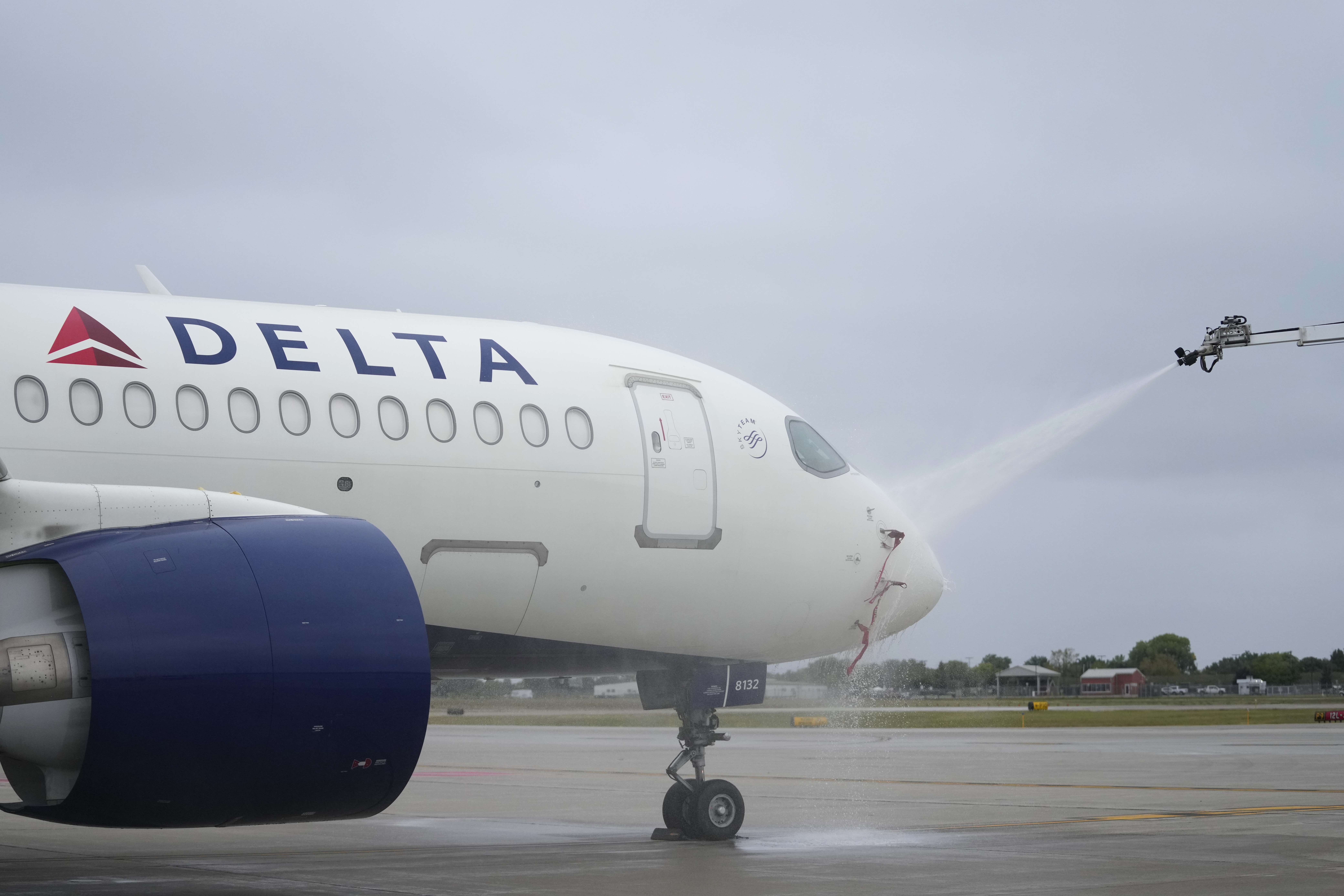
Delta Air Lines has learned that summer is a good time to prepare for winter — and how to de-ice planes so they can keep flying safely in freezing temperatures.
Every summer, Delta brings about 400 workers to Minneapolis to a three-day summer de-ice “boot camp.” They go through computer-based training, watch demonstrations by instructors, and then practice spraying down a plane — using water instead of the chemicals found in de-icing fluid.
The boot campers, who rotate through in groups of 10 or so, return to their home bases and train 6,000 co-workers before October, says Jeannine Ashworth, vice president of airport operations for the Atlanta-based airline.
Here’s how the de-icing process works: Big trucks with tanks of deicing mixture pull up alongside a plane, and an operator in a bucket at the top of a long boom sprays hot fluid that melts ice but doesn’t refreeze because of the chemicals it contains, mainly propylene glycol.
It takes anywhere from a few minutes to 40 minutes or longer to de-ice a plane, depending on the conditions and the size of the plane.
Planes need to be de-iced because if left untreated, ice forms on the body and wings, interfering with the flow of air that keeps the plane aloft. Even a light build-up can affect performance. In worst cases, ice can cause planes to go into an aerodynamic stall and fall from the sky.
De-icing “is the last line of defense in winter operations for a safe aircraft,” says Dustin Foreman, an instructor who normally works at the Atlanta airport. “If we don’t get them clean, airplanes can’t fly. They won’t stay in the air. Safety first, always.”
The hardest part of the training? Getting newbies comfortable with the big trucks, says Michael Ruby, an instructor from Detroit who has been de-icing planes since 1992, when he sprayed down Fokker F27 turboprops for a regional airline.
“The largest vehicle that they’ve ever driven is a Ford Focus. The trucks are 30 feet long, to say nothing about the boom going up in the air. There are a lot of different switches,” Ruby says. “The first time you’re driving something that big — the first time you’re going up in the air — it’s intimidating.”
Minneapolis is a logical place for learning about de-icing. Delta de-iced about 30,000 planes around its system last winter, and 13,000 of those were in Minneapolis.
The boot campers, however, come from all over Delta’s network — even places that are known more for beaches than blizzards.
“I would never have guessed that Jacksonville, Florida, or Pensacola or Tallahassee would need to de-ice aircraft — and they do, so we train employees there as well,” Ashworth says.
(AP)
 Join the official YWN WhatsApp status