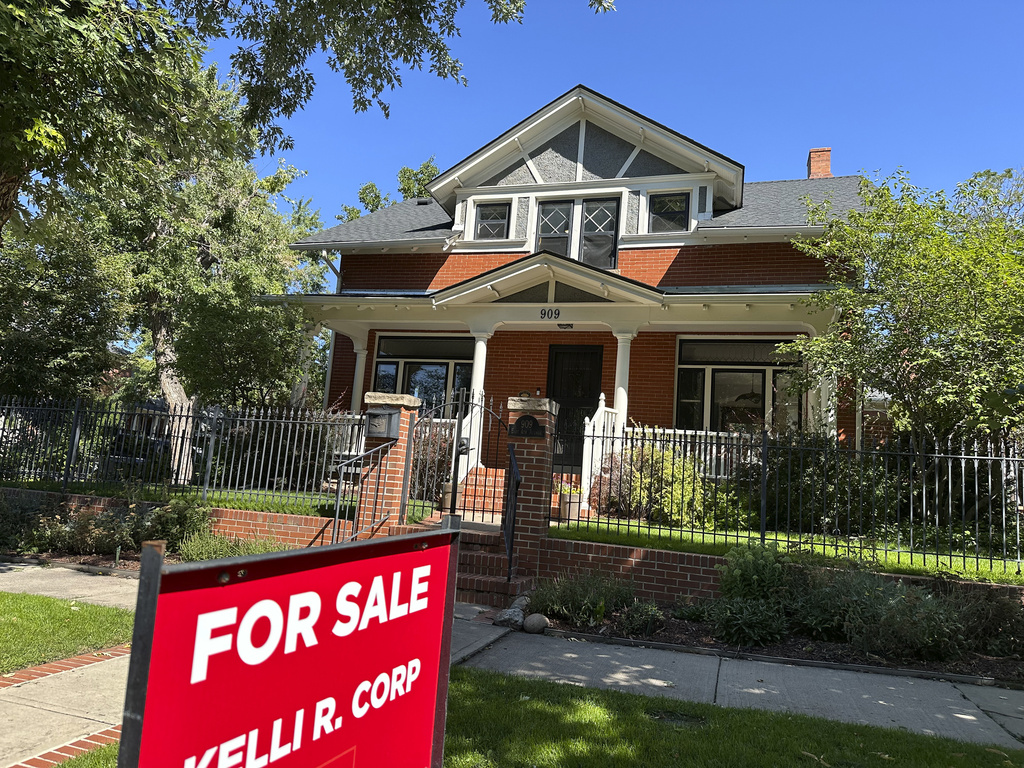
The average rate on a 30-year mortgage in the U.S. eased for the fifth week in a row to its lowest level since late December, a welcome boost for prospective homebuyers in what’s traditionally the busiest time of the year for home sales.
The average rate fell to 6.85% from 6.87% last week, mortgage buyer Freddie Mac said Thursday. A year ago, it averaged 6.9%.
Borrowing costs on 15-year fixed-rate mortgages, popular with homeowners seeking to refinance their home loan to a lower rate, also eased this week. The average rate fell to 6.04% from 6.09% last week. A year ago, it averaged 6.29%, Freddie Mac said.
Rising home prices and elevated mortgage rates, which can add hundreds of dollars a month in costs for borrowers, have kept many prospective home shoppers on the sidelines, especially first-time buyers who don’t have equity from an existing home to put toward a new home purchase.
Sales of previously occupied U.S. homes fell last year to their lowest level in nearly 30 years, extending a national home sales slump that began in 2022 as mortgage rates began to climb from their pandemic-era lows.
The average rate on a 30-year mortgage is now at its lowest level since Dec. 26, when it was also 6.85%. It briefly fell to a 2-year low last September, but has been mostly hovering around 7% this year.
“This stability continues to bode well for potential buyers and sellers as we approach the spring homebuying season,” said Sam Khater, Freddie Mac’s chief economist.
Mortgage rates are influenced by several factors, including how the bond market reacts to the Federal Reserve’s interest rate policy decisions.
The latest pullback in rates echoes a decline in the 10-year Treasury yield, which lenders use as a guide for pricing home loans.
The yield was at 4.79% just a few weeks ago, reflecting fears that inflation may remain stubbornly higher amid a solid U.S. economy and the potential impact of tariffs and other policies proposed by the Trump administration.
The 10-year yield was at 4.5% in midday trading Thursday, following a report showing that more U.S. workers applied for unemployment benefits last week than economists expected.
(AP)
 Join the official YWN WhatsApp status