The United States on Thursday imposed sanctions on two judges of the International Criminal Court, sharply escalating its confrontation with the Hague-based tribunal over its actions targeting Israel.
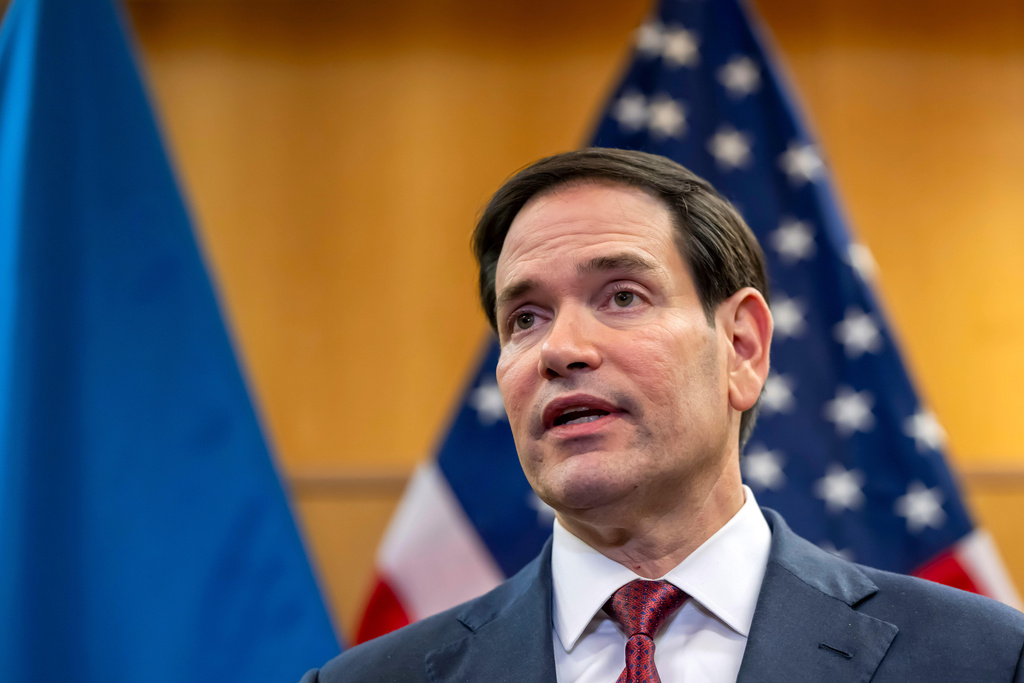
Secretary of State Marco Rubio announced that the U.S. is sanctioning ICC judges Gocha Lordkipanidze of Georgia and Erdenebalsuren Damdin of Mongolia, accusing them of directly participating in efforts to investigate, arrest, detain, or prosecute Israeli nationals without Israel’s consent.
“Today, I am designating two International Criminal Court (ICC) judges… pursuant to Executive Order 14203,” Rubio said, referring to the order President Donald Trump signed in February authorizing sanctions against ICC officials. “These individuals have directly engaged in efforts by the ICC to investigate, arrest, detain, or prosecute Israeli nationals, without Israel’s consent.”
The sanctions freeze any U.S.-based assets held by the judges and bar them — along with their immediate family members — from entering the United States. The United States and Israel are not members of the ICC and have long rejected its jurisdiction.
The move follows months of growing U.S. and Israeli anger at the court, which has pursued legal actions related to Israel while critics argue it has failed to meaningfully address atrocities committed by Hamas, including the October 7, 2023, massacre in which terrorists murdered 1,200 people in Israel and abducted 251 others.
The ICC responded forcefully, condemning the sanctions as an attack on its independence.
“Such measures targeting judges and prosecutors who were elected by the States Parties undermine the rule of law,” the court said in a statement. “When judicial actors are threatened for applying the law, it is the international legal order itself that is placed at risk.”
U.S. officials, however, argue that the ICC has politicized international justice and selectively applied legal standards. American and Israeli leaders have repeatedly accused the court of singling out Israel — a democratic state defending itself against terrorism — while lacking any realistic mechanism to bring Hamas leaders or their supporters to justice.
President Trump’s February executive order marked a major policy shift, authorizing punitive measures against ICC officials involved in cases against U.S. allies. The sanctions announced Thursday are the first to directly target sitting ICC judges.
The action underscores Washington’s broader effort to counter what it views as international institutions overstepping their authority, particularly when those institutions target Israel. Rubio and other administration officials have framed the issue as one of national sovereignty and the defense of allies against what they describe as legally unfounded and politically motivated prosecutions.
In a separate move announced the same day, the U.S. Treasury Department imposed sanctions on 29 vessels and their management firms tied to Iran’s so-called “shadow fleet,” which Washington says is used to covertly export Iranian oil and petroleum products in violation of sanctions.
Treasury officials said the vessels and companies used deceptive shipping practices to transport hundreds of millions of dollars’ worth of Iranian petroleum. The sanctions also target Egyptian businessman Hatem Elsaid Farid Ibrahim Sakr, whose companies are linked to seven of the sanctioned vessels, along with multiple shipping firms involved in the network.
The dual announcements highlight the Trump administration’s aggressive use of sanctions as a central foreign policy tool — targeting both international legal bodies it views as hostile and economic networks accused of funding adversarial regimes.
While the ICC warned that the sanctions threaten the global legal order, U.S. officials made clear that Washington has no intention of backing down, signaling a prolonged standoff between the United States and the international court over Israel, sovereignty, and the limits of international justice.
(YWN World Headquarters – NYC)
 Join the official YWN WhatsApp status