
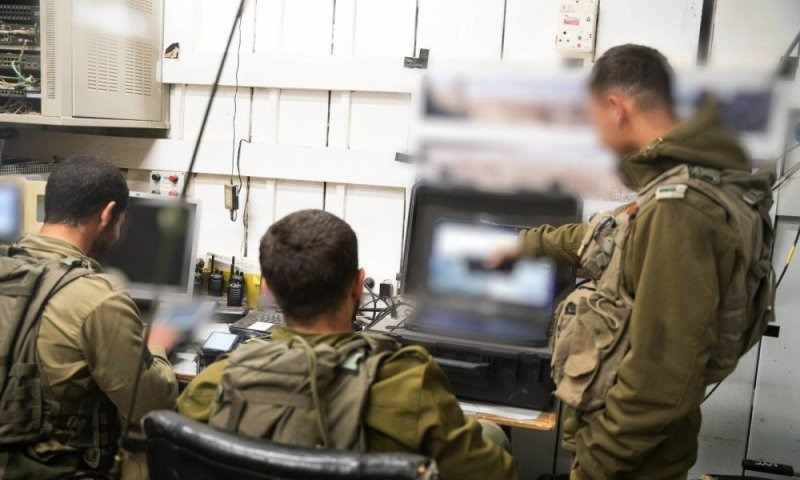
The IDF has launched a sweeping and unprecedented overhaul of how it gathers, processes, and acts on information, establishing a dedicated Artificial Intelligence Division in direct response to the failures exposed on October 7.
The new division was created within the IDF’s C4I and Cyber Defense Directorate, under the command of Maj. Gen. Aviad Dagan, and is already reshaping how the military thinks about command, control, and decision-making in wartime. At its core is a new and highly unusual reserve unit known as AIDF, designed to inject cutting-edge civilian technology expertise directly into the IDF’s operational bloodstream.
Senior officers involved in the effort describe it as a blunt acknowledgment that the military’s existing systems–despite their sophistication–failed to fuse intelligence, sensor data, and human reporting into a clear, actionable picture when it mattered most.
“This move came from understanding that we cannot afford to operate the way we did before,” said Lt. Col. N., the officer leading the establishment of AIDF, in an exclusive interview with The Jerusalem Post. “The challenge is not collecting information anymore. The challenge is decision-making.”
On the morning of October 7, Lt. Col. N. left his home as rocket fire began and rushed to the Kirya, Israel’s military headquarters, where he was responsible for air-defense domains within the C4I Directorate. His immediate task was sharpening IDF strikes against launch sites. Later, he also flew missions as a remotely piloted aircraft operator. The experience, he said, made the need for structural change unavoidable.
Out of that reckoning emerged the AI Division and AIDF, a “living bridge” between Israel’s elite high-tech sector and the IDF. The unit is now recruiting top engineers, data scientists, and AI specialists from the civilian world into reserve service, with plans to reach roughly 100 specialists in its first phase.
“If we try to advance only from within the IDF, we simply won’t deliver the required speed,” Lt. Col. N. said. “The world is changing at a dizzying pace. We need the best minds from the civilian sector inside the system.”
The division is already rolling out operational projects. One AI-driven algorithm developed in cooperation with the Air Force is now running in real time in the air-defense arena, assisting commanders with rapid identification and interception decisions. Other efforts are focused on what the IDF openly acknowledges was one of its greatest failures on October 7: building a coherent situational picture from overwhelming and fragmented data.
One flagship initiative, Project Osnat, uses AI to construct and test complex operational scenarios. What once required weeks of planning by large teams can now be generated dynamically, allowing IDF headquarters to simulate enemy behavior, integrate civilian agencies such as MDA, police, and fire services, and explore alternate developments during exercises.
“Building an exercise used to be a massive undertaking,” Lt. Col. N. explained. “Now we can test decision-making paths much faster and in far greater depth.”
Another project targets procurement and contracts, an area rarely associated with battlefield urgency but one the IDF says bleeds billions. AI tools are being developed to vet suppliers, validate requirements, and assess pricing accuracy before tenders are even issued. Officials say the potential savings reach tens of millions of shekels, while dramatically accelerating delivery timelines.
But the most sensitive focus remains intelligence and warning.
“The painful lesson of October 7 is that information existed,” Lt. Col. N. said. “Sensors, reports, videos, social media–there was a flood. The failure was distilling it into a decision.”
The division is now training AI systems to analyze massive volumes of video footage and convert them into structured intelligence. Rather than monitoring individual cameras, the goal is to detect patterns–tones of distress, abnormal reporting spikes, and converging indicators that signal a major event unfolding in real time.
“On October 7, social networks were flooded with videos while the system didn’t understand where the main centers of terrorist activity were,” Lt. Col. N. said. “AI can point to a phenomenon and tell you: something significant is happening here.”
IDF leaders believe these efforts will trigger a cultural shift across the military, one in which AI does not replace commanders but sharpens their judgment at critical moments.
“The tip of the pyramid is no longer information,” Lt. Col. N. said. “It’s the decision.”
“We’re already doing things differently,” Lt. Col. N. said. “No one person holds all the knowledge. But together, we can build something that helps ensure the failure of October 7 is never repeated.”
(YWN World Headquarters – NYC)
 Join the official YWN WhatsApp status


