
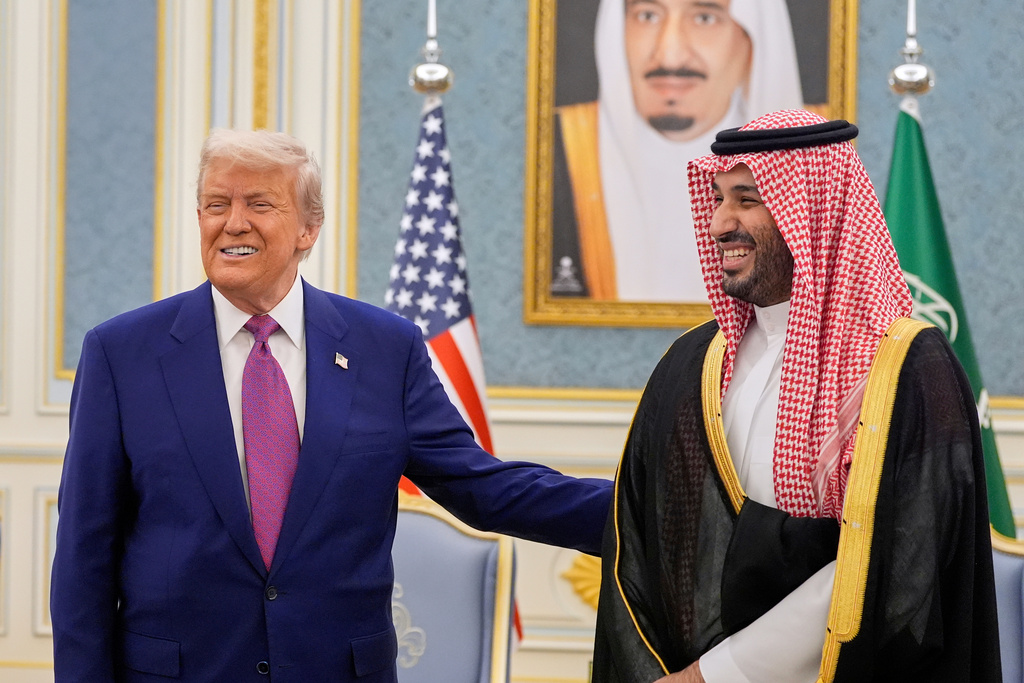
Saudi Arabia is privately urging the Trump administration to avoid a military strike against Iran, warning that an ineffective or sweeping attack could strengthen Tehran’s leadership and help it suppress the nationwide protests that have rocked the country in recent weeks, according to a Saudi royal family source cited by Israel’s N12.
The source said Riyadh has advised President Donald Trump to consider limited, targeted actions instead — including focused military strikes against senior figures involved in repression — rather than a large-scale assault that could backfire politically inside Iran.
An unmeasured U.S. strike, the source warned, could “achieve the opposite” of Washington’s stated goals by allowing Iran’s leadership to rally domestic support and portray the unrest as foreign-backed.
“The regime wants symbolism to alleviate widespread anti-regime unrest,” the source said, arguing that Tehran would use a broad attack to reinforce claims that protesters are tools of foreign powers conspiring against Iranian sovereignty.
By contrast, the source said narrowly tailored strikes against senior officials directing repression would be more likely to be accepted by the Iranian public.
“It would be seen as a rescue operation from repression,” the source said, adding that Iranians would be less likely to view such actions as illegitimate foreign interference.
The comments reflect broader concern among Gulf states that a major U.S. military operation could undermine, rather than support, the protest movement that has spread across Iran since late December. The source said Gulf countries fear that a large-scale attack would give Iran’s clerical leadership an excuse to crush dissent.
“The Gulf countries are united in fearing that a potential Trump attack could serve the rule of the ayatollahs and suppress the popular uprising they have been waiting for a long time,” the source said.
The source also urged non-military measures, including activating Starlink satellite internet services for free across Iran, to help protesters communicate amid government crackdowns.
At the same time, Gulf officials have warned of broader regional consequences. Iran could retaliate by closing or disrupting shipping through the Strait of Hormuz — a critical chokepoint for global energy supplies — or by escalating tensions across the region, the source said.
“This is a sensitive and complicated task,” the source added. “Trump must closely monitor the situation and act wisely.”
The warnings come as U.S. officials signal a growing likelihood of military action. According to a report by The Wall Street Journal, Arab Gulf states have cautioned the Trump administration against striking Iran, even as Trump and senior White House officials suggested this week that military action is increasingly probable.
Saudi Arabia, Oman and Qatar have told U.S. officials that attempts to overthrow Iran’s government could destabilize global oil markets and ultimately harm the American economy, the report said.
Iran, meanwhile, has issued its own warnings. A senior Iranian official told Reuters on Wednesday that Tehran has informed regional countries — including Saudi Arabia, the United Arab Emirates and Turkey — that U.S. military bases on their territory would be targeted if Washington launches an attack on Iran.
Trump has repeatedly threatened military force against Iran and warned Tehran not to retaliate, saying any response would be met with U.S. action “never seen before.”
(YWN World Headquarters – NYC)
 Join the official YWN WhatsApp status




One Response
So let the Arab countries monitor and try to control their own side of the world. Trumps doing what he thinks is the safest for the American people, if Arabia want to do something go ahead. I just doubt that they even have the ability to do anything. All they have is money from oil and not much else. Are they leaders in medicine? Technology? Physics? Have they developed anything? What exactly do they contribute to the world?