
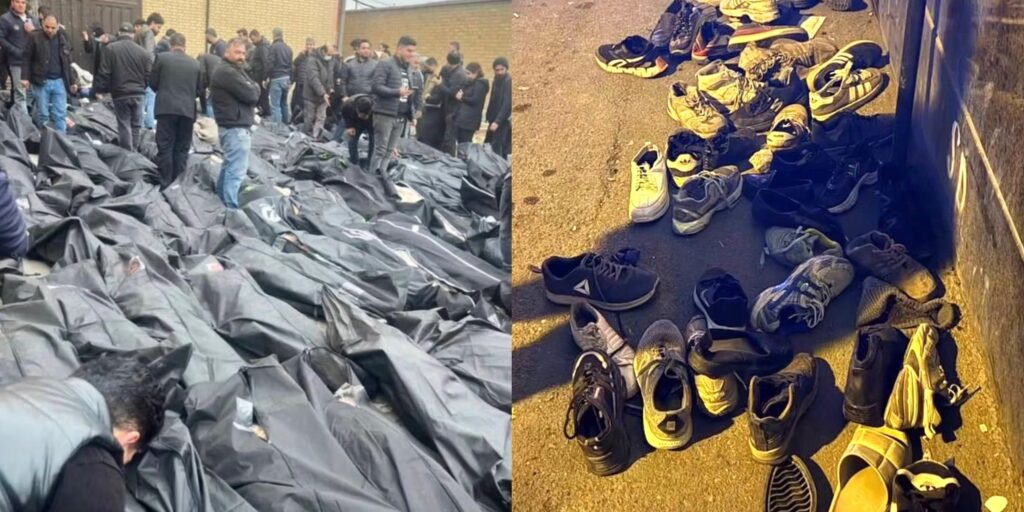
Over 30,000 people were killed on the streets of Iran in just two days–January 8 and 9, two officials from Iran’s Ministry of Health told TIME magazine.
TIME spoke with researchers who estimated that the closest precedent to so many people slaughtered in 48 hours may be the Babi Yar massacre near Kyiv on September 29-30, 1942, when 33,771 Jews were executed by shooting.
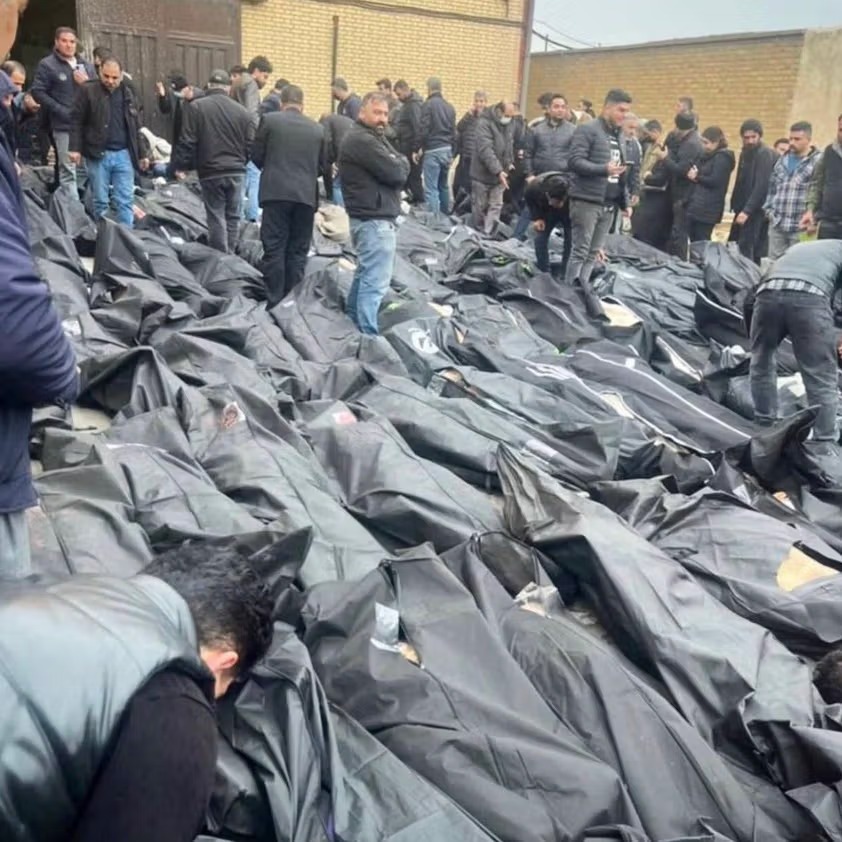
“So many people were slaughtered by Iranian security services on that Thursday and Friday, it overwhelmed the state’s capacity to dispose of the dead,” the report said. “Stocks of body bags were exhausted, and eighteen-wheel semi-trailers replaced ambulances.”
TIME said that although it cannot independently verify the numbers, the estimate of 30,000 deaths aligns with accounts provided by doctors and other first responders who were present during the protests.
The British outlet Daily Mail cited an exiled Iranian doctor who estimated that the total death toll across the protest days exceeds 33,000. The doctor also described the scale of injuries: nearly 100,000 wounded, with a particularly horrifying statistic indicating that 30% of them suffered from direct injuries to their eyes, evidence of deliberate fire by security forces at the protesters’ faces.
Survivor testimonies are harrowing. Regime forces followed wounded protesters on their way to hospitals, brutally dragged them from their beds, and murdered them. “Security forces stood by the beds of the injured,” one medic told the Daily Mail. “We said they needed oxygen and treatment, but they replied, ‘No, they’re fine.’ We simply stitched their wounds, and they took them away.”
Others reported that even patients who managed to escape hospital massacres were later tracked down at home and murdered.
The disturbing data was gathered by doctors and first responders and analyzed by a German-Iranian ophthalmic surgeon, Prof. Amir Parasta.
Parasta added that the alarming number is preliminary, as it does not include deaths in areas that have yet to be surveyed, cases in which bodies were taken directly to morgues, and deaths in military hospitals.
“We are getting closer to reality,” Parasta said. “But I guess the real figures are still way higher.” He added that the regime was executing protesters without even the pretense of trials. Hospital admissions data showed 468 were put to death in the capital, Tehran, alone–with more than 500 across the country.
The Daily Mail noted that “many we spoke with in Iran believe the true death toll far exceeds even this devastating death toll. More than 80,000 liters of blood were spilled–enough to fill a residential swimming pool until it overflowed.”
Many of those murdered were educated young men and women in their teens and twenties. In Tehran, so much blood flowed during those two nights that by morning, the sewers were running red with blood. Two weeks later, the blood still stains the city, revealing the crimes of the regime.
But where is the global outrage over the massacre? According to the doctors, “forces of the Supreme Leader killed 12 times more people than Hamas on October 7, 2023. It took two months for the death toll in Gaza to reach the death toll that Iran suffered in just two nights. There are warnings of a possible second and larger massacre in the prisons.”
“Who is marching for Iran’s dead on the streets of Western capitals?” the Daily Mail asked. “Where are the social media campaigns? Which celebrities are using their platforms to give these victims a voice? For Iranians, the silence is almost as horrifying as the bloodshed. This was almost certainly the largest murder of protesters in the street in modern history.”
In the city of Rasht, the largest city on Iran’s Caspian Sea coast, regime commandos surrounded demonstrators and civilians in the historic bazaar, set it on fire, and shot anyone trying to escape. Estimates of the death toll range from hundreds to as many as 3,000.
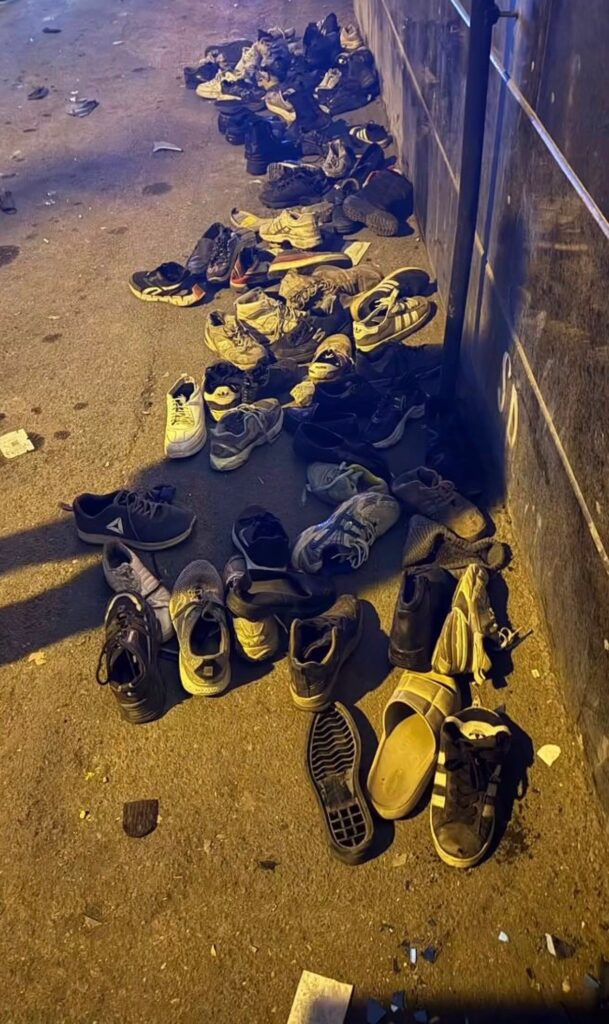
“These shoes in Rasht are not art,” wrote Suren Edgar, vice president of the Australian?Iranian Alliance. “They belonged to people trapped after regime forces set the historic bazaar on fire and shot those trying to escape. The imagery is unmistakable–an Iranian Holocaust unfolding in real time.”
One Iranian exile described losing her cousin, Parnia, in Rasht. Parnia and another cousin were shot dead during a protest.
“What happened next was even more horrific,” the woman said. “Bodies were intentionally mutilated. Some were run over by trucks, so families could not identify them. Some were so badly damaged that they could not be put in body bags. Other bodies were thrown into rivers.”
“When families came to collect the bodies, security forces threw them on the ground, kicked them, and said, ‘Shame on you. Take this body away. This is the child you raised.'”
Edgar wrote on X over the weekend: “The Islamic Republic didn’t just kill protesters–they buried many alive. Families in Tehran, Isfahan, and Arak have testified: while identifying loved ones, they saw faint chest movements, weak breathing, and still-warm bodies inside body bags. Some were rushed to mass graves overnight.”
“Doctors’ leaked statements confirm: oxygen tubes, IV lines, hospital gowns, and even heart-monitor electrodes were still attached to bodies dumped in Kahrizak or morgues. Wounded people were abducted from hospitals mid-treatment and executed or left to die.
“This is not just massacre — it’s systematic live burial and crimes against humanity.”
(YWN Israel Desk–Jerusalem)
 Join the official YWN WhatsApp status





11 Responses
The article asks, “But where is the global outrage over the massacre?” That question is spot on. And here are a few follow-up questions: (1) In Israel, a handful of leftists blocked the Ayalon Freeway to protest inadequate law enforcement in Arab towns in Israel. Are they going to reassess their priorities? (2) Can the UN bring itself to spit out a statement a bit more forceful than voicing “deep concern over the reported excessive use of force by the authorities?” (3) Will any other groups in Eretz Yisrael, or the frum velt outside of Eretz Yisrael, stand up and organize a protest of some sort? If so, I think it would be an enormous kiddush Hashem, and it would be such an anomaly that the media might even pay some attention.
Where is the outrage?
What can we as individuals do?
Genuine question from a concerned human.
Interesting not a peep from the “free free palestine” crowd…the hypocrisy cat got their tongue I guess…maybe they are just too busy these days with other things?
The Don seems entirely preoccupied with his ambitions in Greenland, Venezuela, and trying to win accolades for his extravagant Gaza Nobel prize pipedream, leaving little time for anything else. Honestly, it feels like nobody�s paying attention except for those of us who truly care – Yidden
The truth is the world should be outraged just they don�t care particularly not about Muslims on the other side of the world
Then why the outrage about muslins in Gaza
And we all know the answer
Why do these foolish yiddelech still live there. It�s toit meshiga.
For example, check out CNN. They don’t even mention anything about this story ANYWHERE on their website. If you search in their search bar “Iran”, it says nothing is found with that search word, try checking your spelling etc.
CNN and the rest of liberal media (and personalities) are disgusting garbage of the human race, burying a story like this one. They don’t care about human life- their set of values has become so corrupted. Filthy trash animals.
Jew kills muslim-media coverage, Jew’s fault
Muslim kills Jew-media coverage, Jew’s fault
Muslim kills muslim-what? something happened?
There won’t be any protests in Western capitals because it is NOT the Israelis doing the masacare
These people trusted the lies of Trump.
Taco Don lied then threw them under the bus. No such thing as State dept mercy for non moose lambs