
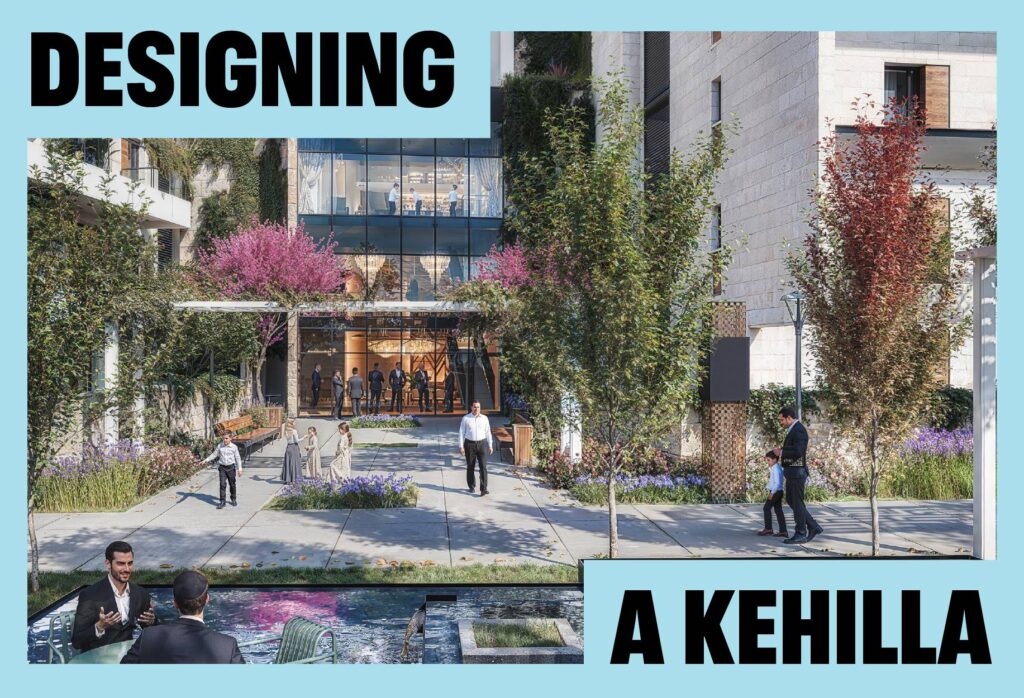
Most real estate projects talk about square footage. Givat Hashalvah is telling a different story. It
begins with a simple premise: the quality of life in Eretz Yisroel should carry dignity, pride, and a
standard that reflects what frum families value, not only in the home, but in the life that
surrounds it.
You can see that shift in what the plan chooses to prioritize. Givat Hashalvah keeps coming
back to togetherness, clarity, and the everyday rhythm of Torah life. And it isn’t only the design
that makes that possible. It’s the people who have already joined, families arriving with shared
purpose and shaping the tone from the start. As one buyer, Aryeh Simon, put it: ‘The standard
of the project is truly above the cut, and what impressed me most is that it’s being built
with a real kehilla atmosphere in mind.’
One of the campaign lines captures it plainly: “A home is where you live. A kehilla is how
you live together.” The real question is simple: can a neighborhood be planned in a way that
helps community form naturally, not by chance, but because the layout and shared spaces
make it easier for people to connect?
The master plan answers with a decisive yes. Parking is planned underground, keeping cars off
the surface level. In its place, the plan creates pedestrian pathways, gardens, seating areas,
and fountains, so the space between the buildings becomes a place for walking, meeting, and
breathing. Instead of isolated buildings, the project is arranged as 18 residential buildings in
three clusters, connected by a promenade that runs through parks and gardens, end to end.
This is where the “spaces between” become the point, because those are the places where
friendships form, where kids bump into each other, where the neighborhood starts to feel
familiar.
Then there are the communal anchors. Between the clusters sit seven dedicated multi-story
residential lounges, totaling 26,000 square feet of community amenities planned for real daily
use. These shared spaces include Torah libraries, shared workspaces, children’s gymborees,
and event halls. Along the promenade, fountains and seating areas are woven into the
walkways, with a bike path looping around the project. This is less about “amenities” as a
marketing word, and more about community as an operating system, built into the plan.
For many families, credibility matters as much as vision, especially in a market where people
want to know that what is promised is what will be delivered. Givat Hashalvah points to the team
behind the construction as part of that confidence: Solel Boneh is described as Israel’s most
recognized construction name, with more than a century of experience and a track record tied to
major national projects. In plain terms, the message is execution you can trust, quality that lasts,
and delivery you can rely on.
And the vision is broad enough to speak to different life stages. The plan includes a multilevel
shopping mall, protected living, a 54,000 square foot fitness center, a pool, and ten shuls,
rounding out a neighborhood designed to support a fuller way of living, both inside the home
and together beyond it.
 Join the official YWN WhatsApp status







1 Response
Wow. Over 500 words (copy-pasted with the hard line-breaks), and absolutely no information on what, where, who, and so on. Just a bunch of hype that was probably AI-generated, with a link to a non-secured form aiming at harvesting your personal info.
Just wow…