
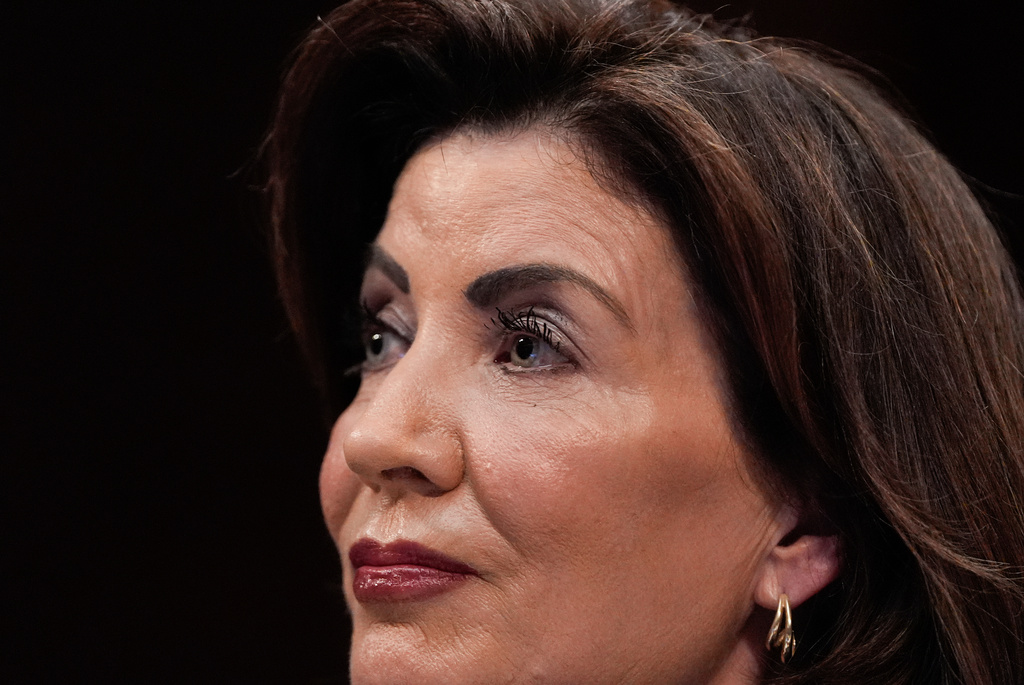
New York is poised to become the latest state to legalize physician-assisted suicide for terminally ill patients after Gov. Kathy Hochul announced Wednesday that she plans to sign the Medical Aid in Dying Act next year, following a deal with legislative leaders to add additional safeguards to the bill.
The announcement marks a decisive and controversial shift in New York law and policy, ending nearly a decade of legislative stalemate over a measure that supporters frame as an act of compassion and opponents condemn as a fundamental breach of the sanctity of life.
In an op-ed published in the Albany Times Union, Hochul said she reached the decision after hearing from terminally ill New Yorkers and their families who described severe pain and suffering at the end of life. At the same time, she acknowledged deep opposition from religious communities and others who believe that deliberately ending a life is morally impermissible.
“I was taught that God is merciful and compassionate, and so must we be,” Hochul wrote. “This includes permitting a merciful option to those facing the unimaginable and searching for comfort in their final months in this life.”
Under the legislation, a terminally ill adult who is expected to die within six months would be permitted to request medication to end his or her life. The request would have to be made in writing, signed by two witnesses, and approved by both an attending physician and a consulting physician. Hochul said she has insisted on further amendments requiring confirmation by a medical doctor that the patient has less than six months to live, as well as an evaluation by a psychologist or psychiatrist to ensure the patient is mentally capable and acting without coercion.
The bill would also include a mandatory five-day waiting period, along with both a written and a recorded oral request to verify free will. Outpatient facilities affiliated with religious hospitals would be permitted to opt out of providing the service, and the law would apply only to New York residents. Hochul said the legislation would take effect six months after she signs it.
Later Wednesday, Hochul said publicly that backing the bill was among the most difficult decisions of her governorship.
“Who am I to deny you or your loved one what they’re begging for at the end of their life?” she said. “I couldn’t do that any longer.”
The move places New York alongside roughly a dozen other states and the District of Columbia that allow medically assisted suicide. Illinois became the most recent state to adopt such a law, signing similar legislation last week that will take effect next year.
The Medical Aid in Dying Act was first introduced in the New York Legislature in 2016 but stalled for years amid intense opposition, particularly from religious organizations and disability rights advocates. Lawmakers ultimately approved the bill earlier this year during the legislative session, sending it to the governor’s desk.
Catholic leaders reacted sharply to Hochul’s announcement. In a joint statement, Cardinal Timothy Dolan and New York’s Catholic bishops said the governor’s decision represented a moral failure by the state.
“This signals our government’s abandonment of its most vulnerable citizens,” the statement said, “telling people who are sick or disabled that suicide in their case is not only acceptable, but is encouraged by our elected leaders.”
Agudath Israel of America, which has led Orthodox Jewish opposition to physician-assisted suicide for more than a decade, also issued a forceful condemnation of the governor’s decision.
“Agudath Israel expresses its profound disappointment at Governor Hochul’s announcement today of her intention to sign the Medical Aid in Dying Act, which would legalize physician-assisted suicide in New York,” the organization said in a statement.
The group said it has spent years lobbying lawmakers, testifying publicly, appealing directly to the governor, and mobilizing community members through action alerts that generated thousands of emails and phone calls. Those efforts, Agudath Israel said, helped delay passage of the bill but were ultimately unable to stop it.
“This law reflects, sadly, societal shifts on the value of life,” the statement said.
In a letter sent to Hochul in July, Agudath Israel warned that the legislation would represent a “paradigm shift” in how New York treats life and its most vulnerable citizens, raising serious moral, medical, and religious concerns. While acknowledging proposed amendments that would expand safeguards — including protections allowing medical practitioners to decline participation without penalty and provisions preventing insurance companies from denying end-of-life care — the organization said its opposition remains unchanged.
“Physician-assisted suicide crosses a moral line that has long been sacrosanct,” Agudath Israel said. “It no longer is. This is a dark day.”
Supporters of the bill argue that the law provides a humane option for people facing unavoidable death and intense suffering, giving them control over their final days. Opponents counter that legalizing assisted suicide risks pressuring vulnerable patients, undermines the role of physicians as healers, and sends a message that some lives are no longer worth preserving.
Hochul has said she will sign the bill into law next year, once the agreed-upon changes are formally incorporated. The debate, however, is far from over, as religious groups and advocacy organizations continue to warn that New York is crossing a line with consequences that cannot be undone.
(YWN World Headquarters – NYC)
 Join the official YWN WhatsApp status





2 Responses
This bill may prolong life by reducing murder.
“�I was taught that God is merciful and compassionate, and so must we be,� Hochul wrote. �This includes permitting a merciful option to those facing the unimaginable and searching for comfort in their final months in this life.�”
Disgraceful that she invoked the Creator as an excuse. By her logic, that could be extended further in multiple directions. Very, very dangerous. R”L L”A.