


An opinion article, written by Yisrael Ze’ev Leventhal and published by JDN, aptly illustrated how the Chareidi world in Israel is standing alone against the judicial system’s plan to uproot it.
The article contrasts two Supreme Court hearings held this week, one on bnei yeshivos and the second on National Security Minister Itamar Ben-Gvir. It should be noted that the article was published shortly before the Supreme Court issued a ruling on the Ben-Gvir case on Thursday, avoiding a constitutional crisis by ordering Prime Minister Binyamin Netanyahu and Ben-Gvir to reach a compromise agreement with Attorney General Gali Baharav Miara on Ben-Gvir’s authority over the police in his role.
Leventhal wrote,� “Only 48 hours separated the dramatic hearings that took place this week within the walls of the Supreme Court: the hearing on the imposition of draconian sanctions and prison sentences on bnei yeshivos, and the hearing on petitions demanding the dismissal of Minister Itamar Ben Gvir. Between the two stood Yom HaShoah and a distance of light-years.
For many, the conscription hearing was reduced to a single quote about “dismantling the Torah world,” while the Ben Gvir hearing is remembered for a few sharp remarks by his lawyer.
But for anyone who listened closely to both proceedings, the contrast was stark. Despite criticism that the Supreme Court has assumed powers never formally granted to it, even a few minutes of the Ben Gvir hearing made clear the gravity with which the judges approached the issue. It was evident that any decision to remove a sitting minister could trigger a civil war.
The judges’ questions to the petitioners and to representatives of the Attorney General, who support their position, were sharp and uncompromising. The government was represented by a senior attorney, and Ben Gvir’s lawyer, David Peter, at times turned the courtroom into something resembling a stage. The sense of gravity of the potential outcome was palpable throughout the lengthy session.
This sense of weight extended beyond the courtroom. Many coalition members issued unequivocal statements supporting Ben Gvir, and several Knesset members made efforts to enter the courtroom despite restrictions.�
Every judge appeared aware that they were playing with fire in the hearing. The words ‘constitutional crisis’ seemed to hang over the proceedings.
In contrast, the hearing on sanctions against bnei yeshivos was conducted in a markedly different atmosphere. The government was represented only by the Attorney General, who of course supports imposing strict sanctions, including criminal indictments and prison sentences.
No Knesset members appeared in court, and no significant effort was made to provide a proper representation of the Olam HaTorah. The only righteous man in Sodom was Cabinet Secretary attorney Yossi Fuchs, who insisted on submitting an independent response to the Supreme Court despite not being a party to the proceedings. He also appeared at the hearing and confronted the judges with clear statements. He clarified to them that they were conducting a hearing with only one side present, since the position of the Attorney General contradicts that of the government. Above all, he stated the obvious: bnei yeshivos are not criminals, and the Chareidim are the most law-abiding public in Israel. Those who brought them to this situation are those who decided to cancel the status of ‘Toraso Umanuso’ (the judges themselves).
No sense of reverence was visible on the faces of the judges during the hearing. The wicked men in robes did not hesitate to press the representative of the Attorney General to examine additional and faster ways to impose sanctions on those who engage in limmud haTorah day and night, by whose merit the world exists.
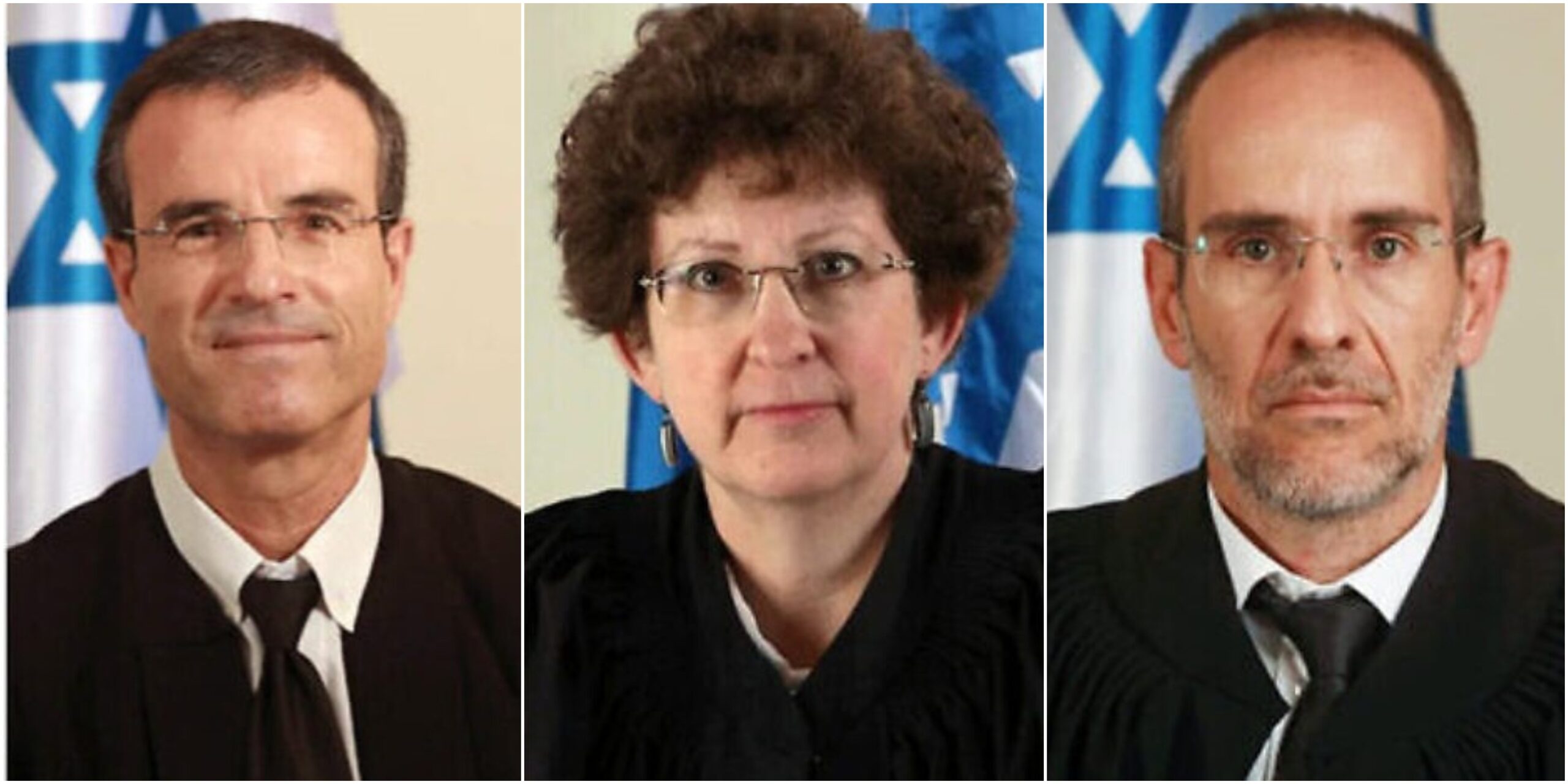
In fact, Justice Sohlberg, who wrote the original wicked ruling in the case, made it starkly clear that he is entirely incapable of understanding the Chareidi side. He declared that he sees no need to balance between different interests and considerations when addressing the conscription of the elite of Am Yisrael and cutting off the transmission of the Torah from generation to generation. Relying on distorted and partial quotations, while ignoring a vast body of literature and the positions of Gedolei HaDoros, he determined that Judaism itself requires that all bnei yeshivos be drafted into the secular army.
It was enough to read three paragraphs of his ruling from four months ago to understand that this kippah-wearing Jew is light years removed from the Olam HaTorah, and that his heart is apathetic to the suffering of Chareidim.
In this story of preserving the Olam HaTorah, we are entirely alone in the arena. Almost everyone has joined forces against us. We have reached a situation in which former MK Gadi Eisenkot allows himself to write and say that he will draft all the Chareidim, but ‘out of appreciation for the value of limmud Torah, he generously agrees to leave a symbolic representation of 3 percent of the yeshiva world who will be allowed to continue learning Torah.’
But we all know how this story will end. It has never been only one who stood against us to destroy us; they have always been many, not one. The Torah world is surrounded by seventy wolves seeking prey, driven mad by jealousy and fueled by burning hatred.
And Hakadosh Baruch Hu saved us from their hands. Titus tried and failed, Sancheiriv planned and fell, Mendelssohn and Herzl schemed and disappeared, Ben-Gurion tried to uproot Judaism and was forgotten, and they too-from Lapid to Sohlberg-will pass from the world, and Am Yisrael will continue to flourish.
But one thing must be remembered. This is not a cliché or just a saying. Truly, we have no one to rely on but Avinu She’B’Shamayim.
(YWN Israel Desk-Jerusalem)






2 Responses
“Ben-Gurion tried to uproot Judaism and was forgotten..”
Actually, the main airport there is named after him, and he was unfortunately very successful in redefining – for many – Judaism into idolatry and heresy with the considerable weight and resources of a “State”.
Overthrow these rasha merusha nazi pigs who.work to benefit hamas and hezbolla today with their self-hating religious hating Rogue agenda catered to the leftist traitor enemies among us