
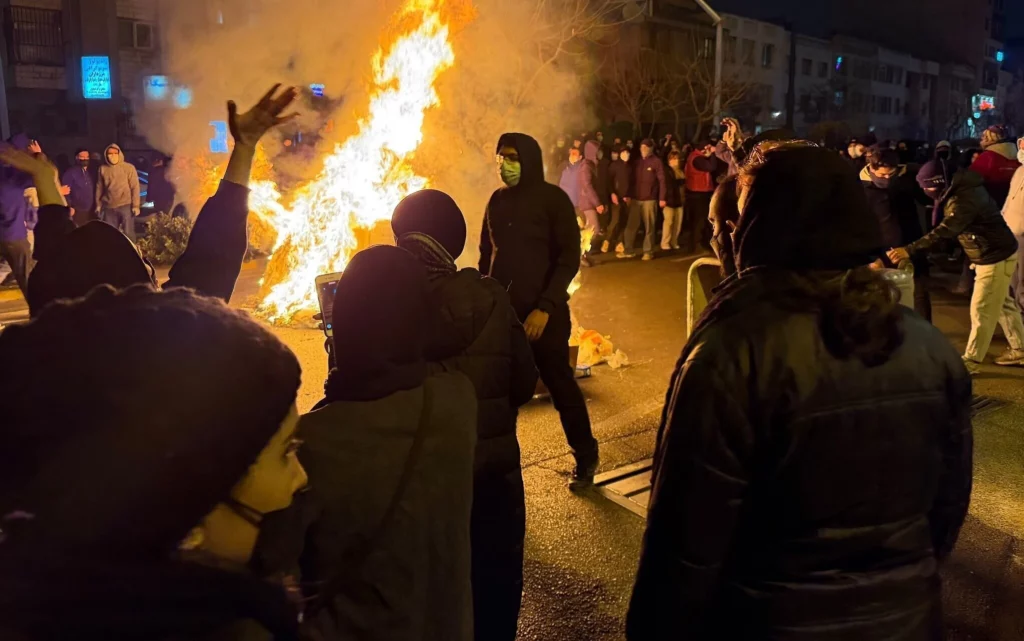
The death toll from the sweeping anti-government protests across Iran has surged dramatically, with multiple independent estimates now placing the number of those killed at more than 20,000.
The protests, which erupted in late December amid Iran�s deepening economic collapse, rapidly evolved into a nationwide uprising against the clerical regime. As the government continues to enforce a near-total internet blackout, a clearer � and increasingly grim � picture of the scope of the bloodshed is emerging through medical networks, human rights groups and foreign intelligence assessments.
While Iranian authorities have acknowledged only �several thousand� deaths � a rare admission attributed to Supreme Leader Ali Khamenei � international observers and activist organizations warn that the true toll is far higher.
Despite the regime�s efforts to suppress information, multiple reports have trickled out.
Medical networks cited by The Sunday Times estimate that between 16,500 and 18,000 people have been killed, with more than 330,000 wounded.
Human rights organizations and international media outlets report that the toll has likely surpassed 20,000, with accounts of morgues in major cities such as Tehran and Shiraz overflowing.
Iranian officials speaking to Reuters have acknowledged more than 5,000 deaths, including roughly 500 members of the security forces � figures widely viewed as a significant understatement.
Human rights monitors say verification is extremely difficult due to the ongoing communications blackout, but the consistency across independent reports points to a sharp and deadly intensification of state violence.
Witnesses across Iran�s 31 provinces report that security forces were ordered to use live ammunition against crowds. Residents describe mass shootings, particularly in Kurdish areas in the northwest, where some of the heaviest fighting was reported.
Human rights advocates have described the strategy as a campaign of �digital darkness,� with the regime imposing a prolonged internet shutdown in an effort to prevent videos and documentation of the killings from reaching the outside world.
Despite these restrictions, reports continue to surface of hospitals overwhelmed with protesters suffering from gunshot wounds, and of security forces firing into crowds from helicopters and rooftops.
Eyewitnesses and medical personnel have described scenes of mass casualties, with bodies reportedly lining hospital corridors and morgues operating beyond capacity.
Iran�s foreign minister reportedly had his invitation to the World Economic Forum in Davos withdrawn, and international pressure has increased on Tehran to scale back participation in certain multinational military and economic initiatives.
Iran�s judiciary has indicated it will not soften its approach. Judiciary spokesperson Asghar Jahangir warned that many detainees would be charged with �moharebeh� � waging war against God � a charge that carries the death penalty under Iranian law.
The regime continues to claim the protests are being fueled by foreign powers and �terrorist elements,� even as senior officials privately acknowledge that the level of unrest and bloodshed is the worst the country has seen since the 1979 Islamic Revolution.
(YWN World Headquarters – NYC)
 Join the official YWN WhatsApp status




One Response
That’s weird, my sources had the death toll close to 30,000 at the beginning of the week.
Almost as though the numbers being reported are filtering through a network starting with the dissidents reporting it from the ground, on to the anti regime media allies and NGOs, and finally reported on by mainstream news.
I haven’t seen any reporting here that the IRGC is demanding cash payments ranging from thousands to tens of thousands of dollars for the release of corpses